A reason-based and inclusive foreign and security policy is necessary to restore peace and stability in Europe. After more than three years of devastating war in Ukraine, the international community must act. Millions of Ukrainians are displaced, and the constant threat to the country’s sovereignty highlights the need for a new course toward peace. The time for empty declarations of support is over; the Ukrainian people have a right to concrete protection and a credible path to peace.
Russian bombings of residential buildings far from the front lines cannot continue, and rhetoric from Western media contributes to escalating the situation. While Ukraine is receiving massive military support, the question now is whether this support should be channeled to an even greater extent toward better protection of the airspace over Ukrainian cities. A ceasefire must be negotiated within the coming weeks, and if it is not concluded, Ukraine’s allies must be ready to secure Ukrainian airspace.

This article was authored by EURUO founder O.M. Lassen. It has been translated from Danish into English using Gemini to ensure accessibility for an international audience.

Tonight, Presidents Putin and Trump will discuss the Ukraine conflict in Alaska. Ukraine, EU leaders, and the United Kingdom have all expressed a desire to be included in genuine peace negotiations. The question is whether it would be prudent to include China and India early in future negotiations, along with the solutions and analyses I present in this article.
The European Context
Several European countries are currently facing major challenges with border security and immigration, which place great demands on national budgets and resources, alongside increased defense spending. Of course, we must have a robust defense. But we must also realize that the Russian people desire cooperation, not opposition. If we do not understand that unwanted immigration is a greater threat to our way of life than the Russian people, then peace, stability, and prosperity in our part of the world will be in danger. The question is whether we have an aversion to engaging with the Russian people, business community, and the country’s political leadership.
The dominant European narrative is that Russia wants to expand its power and subjugate several of the former Soviet republics. I do not share that analysis—and neither does the former director of the Ministry of Foreign Affairs, Friis Arne Petersen. He has emphasized in several interviews that Russia has not attacked NATO countries and that the threat assessment is often exaggerated.
On May 7, 2025, Marie Krarup stated in an interview on dkdox.tv that NATO and Ukraine have effectively lost the war against Russia. She has a background as a Russian language officer and an assistant defense attaché at the Danish embassy in Moscow and has been a member of the Folketing for many years. On August 14, 2025, she reiterated her assessment in an interview with B.T., saying: “Ukraine and the West have lost this war.” Perhaps she is right. But one thing is who wins on the battlefield—another is whether the great power of Russia and the proud Russian people want to live in isolation from the West and the USA. This is a central question. The answer, in my assessment, is simple: The Russian people want to live and travel like all other Europeans. In the information age, no Russian leader can keep a population in isolation without consequences. Therefore, any long-term peace strategy must take into account Russia’s need for social interaction and mutual respect.

The U.S. Approach to Russia—A More Strategic Line
While the EU has increasingly isolated Russia, the USA—especially under the Trump administration—has shown a more strategic and results-oriented approach. The more inclusive diplomatic approach of the USA shows the way. We must learn from this approach to achieve a sustainable agreement. The time has come for diplomatic rethinking. The understanding that peace requires diplomatic relations, economic trade, and respect for Russian security interests is crucial. It is time for Europe to follow suit and recognize that isolation does not create stability—it creates enmity.

The Path to Peace: Understanding and Pragmatism
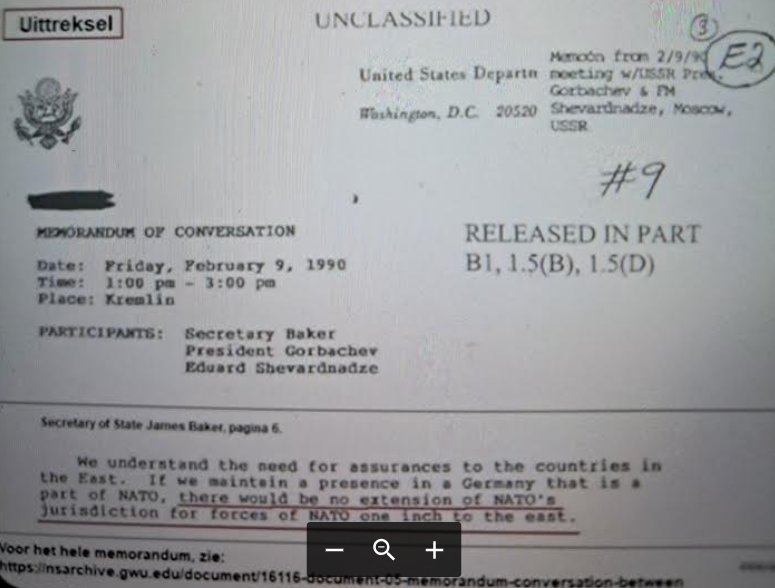
To achieve lasting peace, it is crucial to understand the underlying circumstances that Russia highlights. Foreign Minister Sergei Lavrov’s statements point to a deeper frustration over the disregard for Russian security interests, including NATO’s eastward expansion. In connection with German reunification, Russia believes that the countries that negotiated the agreements on not expanding NATO to the east breached them. A sustainable peace agreement requires that we acknowledge these concerns while at the same time clearly stating that the annexation of Ukrainian regions cannot be accepted.
It is crucial that Ukraine is given full protection of its sovereign rights. The foundation of peace must be balanced: Russia’s demand for security must be met with Ukraine’s right to self-determination. Only by integrating both parties’ concerns into an inclusive European structure, anchored in mutual respect, can we rebuild Ukraine and ensure a peaceful future.
The isolation of Russia is a strategic mistake. The long-term strategy must be inclusion, not exclusion. To contribute to a more nuanced approach to peace, demilitarized zones in Europe are proposed, along with disarmament talks as President Vladimir Putin has also pointed out, and the normalization of trade once the fighting in Ukraine stops. In addition, several other measures are proposed, which are highlighted in this article.
Acknowledging Russia’s Security Demands: A Key to Peace
It is crucial to understand the underlying factors that Russia often emphasizes if lasting peace and stability are to be achieved. The core of the current conflict is rooted in Russia’s perception of broken promises regarding NATO’s eastward expansion after German reunification. Russia feels surrounded by unfriendly states. Furthermore, the conditions for Russian minorities in former Soviet republics, including Ukraine, are relevant to address with regard to culture, language, and education.
The American administration was clearly told in the early 1990s that if Ukraine moved out of the Russian sphere of influence, it would lead to major challenges. James Baker acknowledged this in a conversation with Gorbachev’s adviser, and the American ambassador in Moscow also sent a bulletin home to Washington where he wrote that “one thing is that communism has fallen, but if Ukraine moved away from Russia, it was a much bigger problem.” The US position was also early on that Ukraine “in one way or another should be neutral” and could not become a NATO member. The US has by far the best intelligence on Russian affairs. And if one does not understand the underlying Russian factors that Russia talks about, one cannot understand the conflict. Russia’s security concerns must be incorporated into future peace negotiations from day one.
Political Ethics and Trust: A Necessary Premise for Diplomacy
Trust is the foundation of any lasting agreement. When heads of state make oral commitments about future behavior, as was the case with NATO’s eastward expansion after German reunification, these promises form an implicit basis for a new security architecture. Rejecting such commitments undermines trust and denies the political reality that shaped Russia’s strategic thinking after the Cold War. A lasting peace can only be achieved by looking beyond the narrow legal framework and treating political commitments with the seriousness they deserve. This is about understanding the other party’s perspective to pave the way for a sustainable solution.
Trade, Demilitarized Zones, and a General Security Strategy
Diplomacy and the international community must begin work on a plan for peace and cooperation in Europe. It is a strategic mistake to believe that Russia can be broken through isolation. Russia is a strong nation with a long history, and a large part of the country is in Europe. The long-term strategy must be inclusion, not exclusion.
To contribute to a more nuanced approach to peace, we must consider offering Russia demilitarized zones at all the country’s borders—for example, 100 + 100 km zones. This also means that military exercises are not held on one’s own territory closer than 100 km from Russia’s borders. Furthermore, disarmament talks and the normalization of trade must be initiated, provided that the fighting in Ukraine stops. In addition, a new NATO-EU and Russia Council must be established to de-escalate the situation.
Realities of the Ukraine Conflict and Pragmatic Solutions
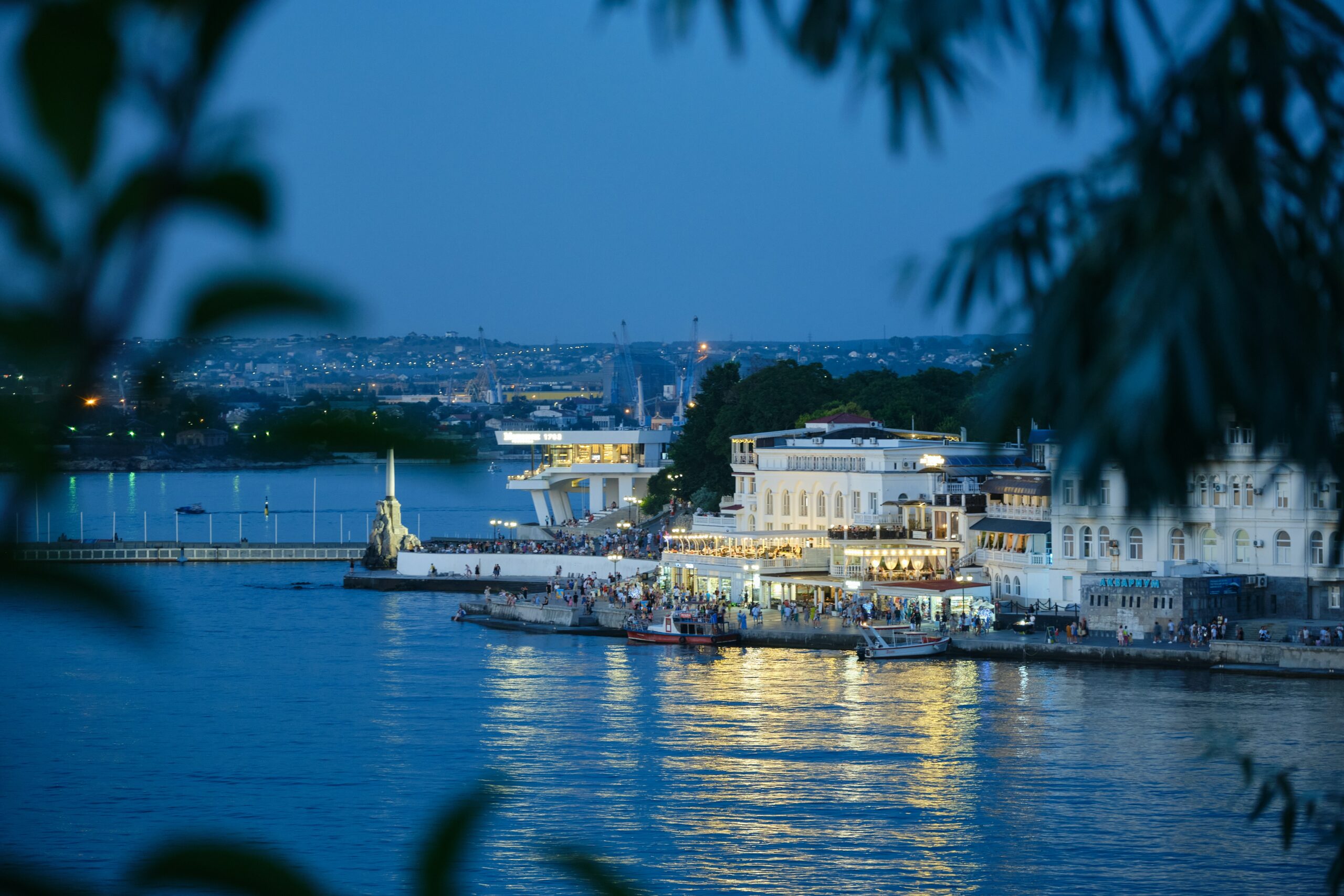
Russia has made demands that are not necessarily insurmountable: increased autonomy for Luhansk and Donetsk (within Ukraine), Ukrainian neutrality, protection of Russian minority rights, and long-term presence in Crimea, where they have had a military base for about 260 years. These topics should be the subject of international negotiations. The international community must support Ukraine in negotiating realistically, without compromising fundamental rights and sovereignty.
A pragmatic solution could include coexistence on the Crimean peninsula, greater autonomy for Donbas, and the possibility of dual citizenship in eastern Ukraine. If Russia were given the opportunity to send special envoys for trade and culture to selected oblasts (Kherson, Zaporizhzhia, Luhansk, and Donetsk), it could potentially pave the way for a ceasefire and a lasting solution. The normalization of trade between the USA, the EU (including Germany), and Russia would make it easier to establish peace between Russia and Ukraine.

Diplomacy and Justice: A Negotiation Track in Istanbul
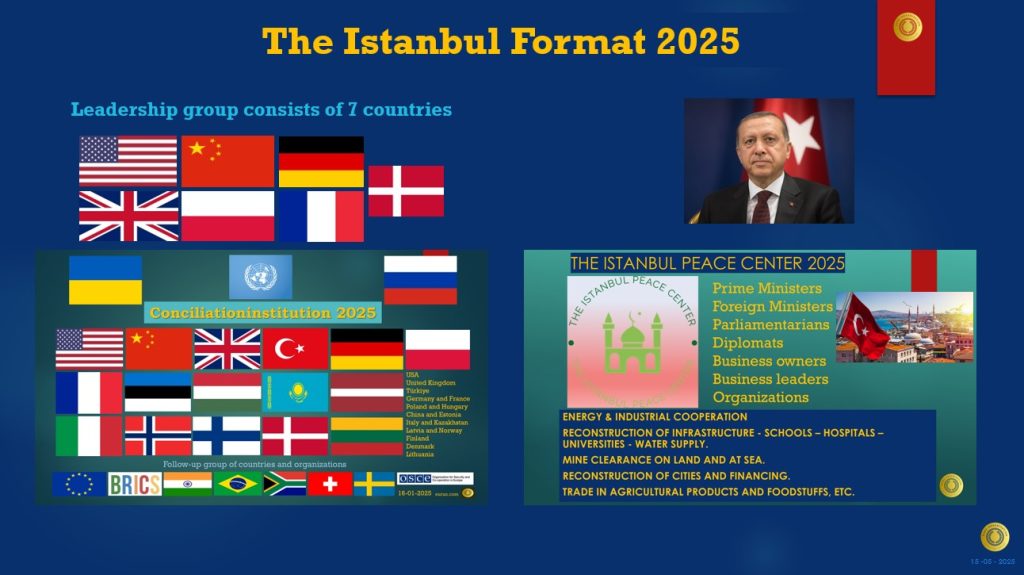
New negotiations should be initiated in Istanbul with Turkey as the host and a broad international mandate. The negotiations should include major powers such as the USA and China, as well as directly affected European neighboring countries. It is essential to establish a framework that gives both parties an exit strategy. The Danish Conciliation Institution, known for creating results through compromise, could serve as a model for this process. Denmark, as a future EU presidency country, has a clear opportunity to take the initiative and lead the initial preparations.


A realistic negotiation framework requires mutual concessions. Russia’s demands can be reconciled with Ukraine’s sovereignty through a well-thought-out negotiation package. At the same time, the international community must:
- Ensure Russian citizens’ access to Europe via temporary residence and work permits.
- Restore diplomatic and trade relations with Russia.
- Offer cultural and economic integration rather than isolation.
The isolation of Russia will only cement enemy images. Peace requires dialogue.
25-Point Peace Plan: The Foundation for Negotiations
As a basis for the negotiations, a plan with 60 to 80 points is proposed, of which 25 points are listed here, with a focus on Ukraine and Russia:
- Ceasefire for 30 days
- Prisoner exchange
- Repatriation of children and refugees who have ended up in Russia
- Security guarantees for Ukraine
- International peacekeeping force of 50,000 people under UN leadership
- Demilitarized zones on both sides of selected borders
- Expanded autonomy in Donetsk and Luhansk
- Coexistence model in Crimea
- Trade and cultural envoys to four Ukrainian regions (Kherson, Zaporizhzhia, Luhansk, and Donetsk)
- Ukrainian military neutrality
- Russian naval base in Crimea under international supervision
- Possibility of dual citizenship in eastern regions
- Integration of the Kerch Bridge into common infrastructure
- Lifting sanctions against Russia and releasing frozen assets
- Eased visa rules for Russian and Ukrainian citizens
- Expanded trade agreement between the EU, UK, Russia, Ukraine, Moldova, and Belarus
- Resumption of diplomatic relations with Russia
- Russia gets access to international payment systems
- Reopening of energy supply routes
- Reestablishment of Nord Stream 1
- Resumption of Western companies’ activities in Russia
- Security guarantees at Russia’s European borders
- Formalization of Russian minority rights in the EU and Ukraine
- In the absence of a ceasefire, 30 countries commit to defending the airspace over Ukrainian cities.
A New Course for Peace and the Future
While Presidents Putin and Trump meet in Alaska, there is a glimmer of hope for Europe’s future for the first time in a long time. Their courage and willingness to sit at the negotiating table is a strong signal to the world that diplomacy is the only viable path forward. It is a reminder to all of us—from Berlin, Paris, and London to Kyiv, Warsaw, and Ankara—that true strength lies in dialogue, not in isolation.
President Zelensky, your leadership and fight for Ukraine’s sovereignty is a shining example of courage. With this historic meeting in Alaska, we see that there can be a way forward from the battlefield to the negotiation room, where a sustainable solution can be shaped. The international community thanks President Erdoğan and Turkey for generously offering a neutral basis for future negotiations. This gesture is invaluable to ensure a platform where all voices can be heard and all parties can find a compromise.
We must build bridges, not walls. And here, China and India can play a crucial role as partners who can bring a new dynamic to the table. Their insight and perspectives will be crucial for building a peaceful and stable world order. I also want to praise the persistent peace efforts of leaders in Germany, Poland, France, and the United Kingdom, whose diplomacy is essential to achieving a unified European solution.
As the founder of EURUO, it is my deepest hope that this article and the thoughts presented can serve as a roadmap for a new beginning. I hope that the 25-point peace plan and the extended plan in the appendix can be a foundation for creating lasting peace and stability. We owe it to the Ukrainian and Russian people, who want nothing more than to be able to live freely, build their lives, and travel freely like the rest of the world. Let us hope that Europe’s leaders seize this moment and show that they can live up to our responsibility and not let history repeat itself. Only by working together can we ensure a peaceful future for all of us.
Appendix: 60-Point Proposal for Possible Upcoming Peace Negotiations in Istanbul
The hope is for a constructive collaboration where shared resources and experiences pave the way for a new era of peace.
- A negotiation format is established where the USA and selected countries participate.
- A fixed negotiation forum with direct dialogue between Ukraine, Russia, and international mediators.
- A permanent and formalized conciliation institution is established in Istanbul in Türkiye
- Only the countries and organizations that can accept this negotiation draft for a peace plan can participate in the conciliation institution established in Istanbul. This ensures a constructive and targeted negotiation climate where all participants work toward a common solution.
- A ceasefire is introduced for the next 30 days, during which the points below will be discussed.
- A phased exit strategy with clear timelines for Russian military withdrawal is prepared.
- Russia must withdraw from the occupied territories in Ukraine and back to the Crimean peninsula.
- Russia retains its military base on the Crimean peninsula and enters into an agreement with Ukraine on this.
- Russia and Ukraine draw up a plan for coexistence on the Crimean peninsula.
- Expanded autonomy for Donetsk and Luhansk, within Ukraine’s borders.
- Russia establishes six centers for trade and cultural exchange in Ukraine.
- Russia helps to rebuild these 6 areas: Luhansk, Sevastopol, Mariupol, Donetsk, Zaporizhzhia, and Kherson.
- Russia sends special envoys for trade and culture to these selected oblasts in Ukraine: Kherson, Zaporizhzhia, Luhansk, and Donetsk.
- Russia and Ukraine initiate a prisoner exchange.
- A plan for refugees and the repatriation of Ukrainian citizens who have ended up in Russia.
- Russian minority rights in the EU and Ukraine are formalized, including language, culture, and education.
- Possible dual citizenship in selected areas in eastern Ukraine.
- The Zaporizhzhia nuclear power plant becomes a demilitarized zone, where the USA cooperates with Ukraine on the operation, maintenance, and security of the plant.
- Ukraine contributes to a sufficient water supply to Crimea from Kherson.
- The Russian Rosselkhozbank gets access to the international payment system SWIFT.
- Russian politicians and business owners cannot be prosecuted in connection with the Russian invasion of Ukraine.
- Russian cargo ships get better access to European ports and the international insurance system.
- The ammonia gas pipeline is reopened.
- Ukraine gets the opportunity to export grain again.
- The USA and Ukraine enter into an agreement on mining and energy cooperation.
- The USA is responsible for the security of the mining.
- Maritime mine clearance tasks.
- No foreign troops on Ukrainian soil in peacetime.
- 50,000 unarmed peace observers are deployed in Ukraine.
- A conversation about future trade policy and interaction in Europe.
- An EU-NATO-Russia council is established in Finland, with the task of working on geopolitical conditions, as well as trade and visa policy between Russia, the EU, and the UK.
- A plan for the reconstruction of Ukraine and financing (over 50 countries participate).
- A new security structure in Europe is negotiated in Finland.
- Russia gets security guarantees at all its European borders.
- A new agreement on arms inspections in Europe.
- Demilitarized zones on land, at sea, and in the air at the borders in Europe.
- No military exercises at each other’s borders.
- Ukraine receives strong, internationally ratified security guarantees from its allies (approximately 30 countries are behind the agreement).
- Ukraine is free to enter into trade agreements with countries and organizations.
- Energy cooperation between Russia, the rest of Europe, and Ukraine is restored.
- Nord Stream 1 and 2 are reestablished.
- Germany and other countries commit to buying energy from Russia again.
- All sanctions against Russian businesses and individuals are lifted.
- Russian frozen assets are released.
- The companies that have left Russia commit—as far as possible—to re-establishing their business and activity in the country.
- Compensation to Ukrainian citizens who have lost property in Crimea.
- Russia rejoins the international payment systems.
- International support for the reconstruction of Ukraine and financial compensation from Russia for war damage.
- Ensuring access to food and protection of export routes for grain and other foodstuffs.
- Energy security is ensured, including the reconstruction of Ukraine’s energy infrastructure.
- Russia and Ukraine enter into a trade agreement, including gas supplies from Russia.
- The Kerch Bridge, which connects Russia and the Crimean peninsula, plays an important role and should be integrated into the traffic system for the benefit of both parties.
- Relaxation of visa rules for Russian and Ukrainian citizens to the EU and the UK.
- The EU enters into an expanded trade agreement with Russia, Ukraine, Great Britain, Moldova, and Belarus (over 260 million people).
- A Trade & Peace Center is established in Istanbul to coordinate Ukraine’s reconstruction and financing.
- The possibility of establishing dual citizenship for the 4+1 regions: Donetsk, Luhansk, Kherson, Zaporizhzhia, and the Crimean peninsula.
- Lay down a detailed decentralized self-government model for Donetsk and Luhansk.
- Introduce a comprehensive minority protection law that recognizes both Ukrainian and Russian-speaking citizens, both in Ukraine and in the old Soviet Republics.
- Establish a neutral, international monitoring mechanism for following up on the implementation of the peace agreement.
- EU countries re-establish normal trade and diplomatic relations with Russia.
- Guarantee residential democracy by establishing local dialogue forums where residents actively participate in decision-making processes in eastern Ukraine.
- Establish an independent truth and reconciliation commission with representatives from Ukraine, Russia, and international civil society, which documents war crimes, addresses the suffering of victims, and promotes an inclusive, national reconciliation process.
- A common peace and future platform must be established that brings together Ukraine, Russia, and international partners to formulate a sustainable and just post-war order. The platform must create hope and engage the populations through a constructive dialogue that builds on learning from the wounds of the past and a shared striving for a secure, dignified, and peaceful future, where visions for sustainable growth, culture, and innovation are developed. This platform must function as a neutral forum where all parties together create the conditions for a just and sustainable reconciliation process that ensures a safe and dignified future for both countries and their populations.
These 60 points cover legal, political, economic, and cultural aspects and should contribute to an inclusive and lasting peace process, which leads to a reasonable exit strategy and a mutual recognition of the needs of both parties, with a foundation for stability and long-term reconciliation.
Note: Originally written in Danish by EURUO founder O.M. Lassen. Translated into English using Gemini.