A Strategic Diplomatic Initiative for Stability, Security and Coexistence in Europe
Europe and the International Community at a Geopolitical Crossroads
Europe is facing its most severe security crisis since the end of the Second World War. The ongoing conflict between Russia and Ukraine – and Ukraine’s allies – affects not only the Ukrainian and Russian people. It affects all of Europe, and it affects the entire international community.

The conflict destabilizes global trade, energy security, supply chains, international alliances, and the broader global order. It creates a geopolitical imbalance that no continent can ignore.
The existing diplomatic track has stalled. A new format, a new framework, and a renewed willingness to place all parties’ concerns and interests openly on the table are urgently required. Only through such openness can a realistic and lasting peace be achieved.
I. A New International Format: The 16‑Nation Peace Track
To break the deadlock, a permanent, intensive, and continuous negotiation format is established, consisting of 16 nations, each represented by one top‑level diplomat. This group works without interruption and with a clear mandate: to draft, negotiate, and finalize a comprehensive peace framework.

China as an Active Participant
China cannot remain in the background. As a global power and a central economic partner for both the EU and Russia, China must take an active role in shaping the peace framework.
The United States’ Pragmatic and Global Diplomacy
The United States has demonstrated a pragmatic and globally oriented diplomatic approach. The foundation for lasting peace and stability is the establishment of a ceasefire, followed by the normalization of diplomatic relations and trade with Russia. This is a wise strategy and the only sensible path toward global stability: interaction and economic cooperation.
II. Geopolitical De‑escalation and Security Principles
To establish a stable European security architecture, the following principles are agreed:
1. No NATO Forces at Russia’s Borders
In states bordering Russia, no NATO forces from other countries will be stationed.
2. Military Restraint and Russian Observer Status
Military exercises in Eastern Europe will be conducted on a reduced scale, and Russia will be granted permanent observer status. The United States will engage in dialogue on reducing selected military bases in Europe.
3. Ukraine’s Military Neutrality – with Strong Guarantees
Ukraine will adopt a neutral military status outside military alliances, while receiving strong, verified international security guarantees and full access to expanded EU cooperation and membership.
4. A New EU‑NATO‑Russia Council
A permanent council will be established in Finland to address geopolitics, de‑escalation, trade cooperation, and joint crisis management during acute security incidents.
III. Minority Rights: The European Model
1. European Standards for Russian Minorities
Russian minorities across Europe will be guaranteed significantly improved opportunities for cultural expression, language use, and institutional support, based on the successful Danish‑German minority model.
2. Linguistic and Cultural Protection in Ukraine
Ukraine will guarantee full rights for the Russian language and Russian cultural institutions in Donetsk, Luhansk, Zaporizhzhia, and Kherson.
IV. Expanded Self‑Governance and Coexistence on Crimea
1. Expanded Self‑Governance in Donbas
Donetsk and Luhansk will receive expanded self‑governance in culture, language, education, local trade, economic activity, and regional administration.
Border and passport control will be carried out by lightly armed state units, specifically organized for civilian control tasks and subject to joint oversight.
Five major urban areas will be excluded and remain under current administrative arrangements.
2. A Long‑Term, Non‑Expiring Arrangement for Crimea
The parties will begin negotiations on a permanent, long‑term arrangement for coexistence on the Crimean Peninsula, ensuring that both Russian and Ukrainian interests are respected.
The arrangement will include:
- joint administration of ports,
- joint administration of energy infrastructure,
- joint administration of water supply systems.
This creates stability, predictability, and a peaceful framework for coexistence.
V. Diplomacy as Europe’s Future
Peace is not created through diktat, but through diplomacy. The 16 top‑level diplomats are entrusted with a historic responsibility: to transform these principles into a binding, fair, and honorable peace agreement.
Europe needs stability. Ukraine needs security. Russia needs a path back to diplomacy. And the world needs Europe to once again be a continent defined by peace, trade, and geopolitical balance.
This peace proposal attempts to be a step in that direction.
O.M. Lassen
EUROPEAN PEACE FRAMEWORK 2026
A Strategic Diplomatic Initiative for Stability, Security and Coexistence in Europe
Europa og verdenssamfundet i en geopolitisk skæbnetid
Europa befinder sig i sin mest alvorlige sikkerhedspolitiske krise siden Anden Verdenskrig. Den vedvarende konflikt mellem Rusland og Ukraine – og Ukraines allierede – rammer ikke kun det ukrainske og russiske folk. Den rammer hele Europa, og den rammer hele verdenssamfundet.
Konflikten destabiliserer global handel, energiforsyning, forsyningskæder, internationale alliancer og den bredere globale orden. Den skaber en geopolitisk ubalance, som intet kontinent kan ignorere.
Det eksisterende diplomatiske spor er gået i stå. Der er behov for et nyt format, en ny ramme og et nyt mod til at lægge alle parters bekymringer og interesser åbent på bordet. Kun sådan kan der skabes en realistisk og varig fred.
I. Et Nyt Internationalt Format: 16‑Nations Peace Track
For at bryde dødvandet etableres et fast, intensivt og kontinuerligt forhandlingsformat bestående af 16 nationer, hver repræsenteret af én topdiplomat. Formatet arbejder uafbrudt med mandat til at udforme og færdiggøre et samlet fredsudkast.
Kina som aktiv medspiller
Kina kan ikke stå i skyggen. Som global stormagt og central handelspartner for både EU og Rusland skal Kina indtage en aktiv rolle i udformningen af fredsrammen.
USA’s Pragmatiske og Globale Diplomati
USA’s linje har påvist en pragmatisk og globalt orienteret forhandlingspolitik. Fundamentet for varig fred og stabilitet er, at der opnås våbenhvile, hvorefter de diplomatiske forbindelser og samhandel med Rusland normaliseres. Dette er en klog strategi og den eneste fornuftige vej for at skabe fred og stabilitet i verden, nemlig interaktion og samhandel.
II. Geopolitisk Afspænding og Sikkerhedsprincipper
For at skabe en stabil europæisk sikkerhedsarkitektur fastlægges følgende principper:
1. Ingen NATO‑styrker ved Ruslands grænser
I grænsestater mod Rusland udstationeres ingen NATO‑styrker fra andre lande.
2. Militær tilbageholdenhed og russisk observatørstatus
Militærøvelser i Østeuropa gennemføres i mindre målestok, og Rusland tildeles fast observatørstatus. USA indleder dialog om reduktion af udvalgte baser i Europa.
3. Ukraines militære neutralitet – med stærke garantier
Ukraine indtager en neutral status uden for militæralliancer, men får stærke, verificerede internationale sikkerhedsgarantier samt fuld ret til udvidet EU‑integration og medlemskab.
4. Et nyt EU‑NATO‑Rusland Råd
Et permanent råd etableres i Finland for at håndtere geopolitik, nedrustning, samhandel og fælles krisestyring ved akutte sikkerhedspolitiske hændelser.
III. Mindretalsrettigheder: Den Europæiske Model
1. Europæisk standard for russiske mindretal
Russiske mindretal i Europa sikres markant bedre muligheder for kultur, sprog og institutioner – efter forbillede af den dansk‑tyske mindretalsmodel.
2. Sproglig og kulturel beskyttelse i Ukraine
Ukraine garanterer fulde rettigheder for russisk sprog og kultur i Donetsk, Luhansk, Zaporizjzja og Kherson.
IV. Udvidet Selvstyre og Sameksistens på Krim
1. Udvidet selvstyre i Donbas
Donetsk og Luhansk tildeles udvidet selvstyre inden for kultur, sprog, uddannelse, handel og regional forvaltning.
Grænse‑ og paskontrol udføres af let bevæbnede statslige enheder, organiseret specifikt til civile kontrolopgaver og underlagt fælles overvågning.
Fem større byområder undtages og forbliver under nuværende administration.
2. En langtidsholdbar ordning for Krim – uden tidsbegrænsning
Parterne indleder forhandlinger om en permanent, langtidsholdbar ordning for sameksistens på Krim, hvor både russiske og ukrainske interesser tilgodeses.
Ordningen skal omfatte:
- fælles administration af havne,
- fælles administration af energi‑infrastruktur,
- fælles administration af vandforsyning.
Dette skaber stabilitet, forudsigelighed og en fredelig ramme for sameksistens.
V. Diplomati som Europas Fremtid
Fred skabes ikke gennem diktat, men gennem diplomati. De 16 topdiplomater får en historisk opgave: at omsætte disse principper til en bindende, retfærdig og ærefuld fredsaftale.
Europa har brug for stabilitet. Ukraine har brug for sikkerhed. Rusland har brug for en vej tilbage til diplomati. Og verden har brug for, at Europa igen bliver et kontinent præget af fred, handel og geopolitisk balance.
Dette fredsudkast forsøger at være et skridt i den retning.
O.M. Lassen
llø
EXECUTIVE SUMMARY — European Peace Framework & Istanbul 100‑Point Plan
A Unified Architecture for Peace, Security and Economic Integration in Europe
Europe and the international community are facing a historic geopolitical turning point. The war between Russia and Ukraine has destabilized global trade, energy security, supply chains, alliances, and the broader international order — a geopolitical imbalance that no continent can ignore.
The existing diplomatic track has stalled. A new format, a new framework, and a renewed willingness to place all parties’ concerns and interests openly on the table are urgently required. This executive summary presents a unified peace architecture combining:
- The European Peace Framework 2026 — a strategic agreement on security, neutrality, minority rights, and coexistence.
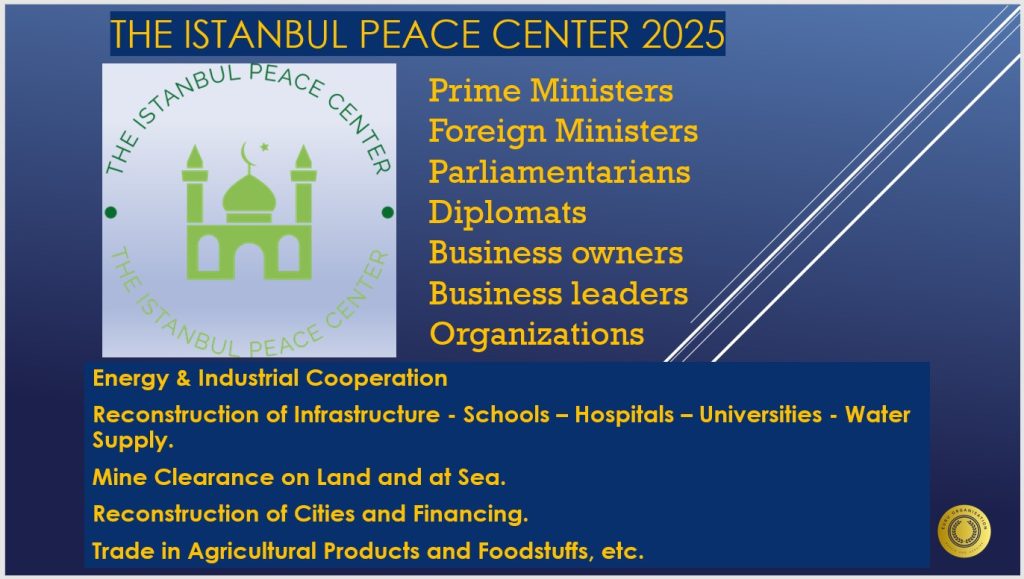
- The Istanbul 100‑Point Peace Plan — a global blueprint for reconstruction, trade normalization, energy cooperation, and long‑term integration.
Together, they form a realistic, balanced, and forward‑looking foundation for lasting peace.
1. A New International Format: The 16‑Nation Peace Track
A permanent negotiation format led by 16 key nations — including the United States, China, India, Brazil, Turkey, major EU states, Japan, Canada, and South Africa — coordinates the peace process. FN, EU, NATO, OSCE, AU and ASEAN participate as official observers. This structure ensures global ownership and prevents regional isolation.
2. Security, Neutrality and De‑escalation
- Ukraine adopts military neutrality with strong, verified international guarantees.
- No NATO forces are stationed at Russia’s borders.
- Military exercises in Eastern Europe are scaled down; Russia receives observer status.
- A permanent EU‑NATO‑Russia Council is established in Finland for geopolitics, de‑escalation, trade, and crisis management.
- Border zones are demilitarized and monitored through joint satellite systems.
3. Minority Rights and Reconciliation
- Russian minorities across Europe receive cultural and linguistic protections based on the Danish‑German model.
- Ukraine guarantees full rights for Russian language and culture in eastern and southern regions.
- A Truth and Reconciliation Commission, shared memorials, joint history education, and cultural programs strengthen long‑term trust.
4. Donbas Self‑Governance & Crimea Coexistence
- Donetsk and Luhansk receive expanded self‑governance in culture, language, education, and regional administration.
- Border and passport control is carried out by lightly armed state units under joint oversight.
- Crimea receives a permanent, non‑expiring coexistence arrangement, including:
- joint administration of ports
- joint administration of energy infrastructure
- joint administration of water supply systems
This creates stability, predictability, and peaceful coexistence.
5. Global Reconstruction and Economic Integration
- A global reconstruction fund of 200–500 billion USD over 20–25 years.
- Mariupol rebuilt as a free‑trade zone.
- EU, USA, China, Gulf States finance infrastructure, energy, digital security, and green transition.
- Sanctions eased step‑by‑step based on verified milestones.
- Trade normalization across energy, agriculture, transit, and technology.
6. Long‑Term Integration and Cooperation
- Ukraine receives EU‑associated status; Russia gains access to EU’s internal market for non‑strategic goods.
- Visa‑free travel, joint customs zones, youth exchanges, and a shared space program deepen integration.
- Istanbul Center for Peace and Trade (ICFS) becomes the global hub for reconstruction, energy cooperation, and economic dialogue.
7. Diplomacy as Europe’s Future
Peace is built through diplomacy, trade, and mutual respect — not through diktat. The combined European Peace Framework and Istanbul 100‑Point Plan attempt to be a step in that direction: A unified architecture that integrates security, economics, culture, energy, and geopolitics into one coherent model for a stable and peaceful future.