Dear Diplomats,

As we write this on June 9, 2025, I remain deeply puzzled that the international community has failed to halt the tragic hostilities on Ukrainian soil. The world has had three years to act, yet we continue to face a brutal and unacceptable reality. Apathy cannot be our legacy — we must revive diplomatic channels, strengthen negotiations, and find a path toward a just and lasting peace. The international community can no longer afford delays; the time for courageous decisions is now.
I also reflect on how Ukraine, which between 1994 and 1996 surrendered approximately 1,900 strategic and tactical nuclear warheads to Russia, never received robust security guarantees from the signatories — particularly the United States and the United Kingdom. As I understand it, negotiations were held in Istanbul in March 2022 between Russia and Ukraine, focusing especially on Ukrainian neutrality and autonomy for Donbass.
It also appears to me that the United States and the United Kingdom “sabotaged” these peace talks by giving Ukraine assurances and advice: “Hold firm to your sovereign rights — we stand behind you militarily and economically as long as necessary.” To my knowledge, Ukraine has not received the promised ammunition and still lacks effective air defense systems. Meanwhile, about 30 countries have pledged concrete security guarantees to Ukraine and have committed to defend it after the war ends.
It is understandable that countries bordering Russia have an interest in supporting Ukraine and investing in their own defense. It is also understandable that a heavily indebted United States cannot provide military aid free of charge, especially when several Western countries with low public debt provide comparatively less support.
The former NATO Secretary General Jens Stoltenberg, now Norway’s Minister of Finance, has urged NATO countries to rearm and has been a strong supporter of Ukraine. Norway’s sovereign wealth fund had a market value of approximately NOK 19.755 trillion at the end of 2024. It is encouraging that Norway plans to increase support for Ukraine; perhaps Stoltenberg could consider allocating NOK 50 to 75 billion for this purpose. Denmark has also been a major contributor to the Ukrainian people.
It is positive that the new German Chancellor Friedrich Merz is a strong supporter of Ukraine and an effective leader, but I also hope he seeks stable and future-proof peace in Europe by resuming normal trade relations with Russia, including energy agreements. A weakened Russia is not a desirable outcome, and history shows that weakening and harsh sanctions against a warring power can have fatal consequences. Neither the Ukrainian nor Russian peoples need more suffering and isolation.
I am also perplexed that 30 countries have pledged to protect Ukraine but now — after over three years of war — the allies appear paralyzed. If the will to protect truly existed, why has no no-fly zone been imposed? Why does terror against civilians continue? How can a people under constant siege be protected? Ukraine has waited patiently for three years, but protection remains incomplete.
I also cannot understand why the international community has failed to make clear to the Russian government that claiming another country’s cities is utterly unacceptable.
Regarding the Crimean Peninsula, we know it holds a special status for both the Russian and Ukrainian peoples, and both sides must find a solution that ensures coexistence. As for Donetsk and Luhansk, their attraction to Russia was stronger than to Kyiv, but after more than three years of war, that sympathy appears to have disappeared. I believe concessions and greater autonomy for Donbass could be a way forward for the Ukrainian government and people.
Russia’s naval base in Crimea has existed for nearly 260 years. If the Ukrainian people want to remove this base, it will require enormous resources, and the question is whether this is realistic at all. Therefore, Ukraine must consider whether to accept Russia’s presence on the peninsula as part of a sustainable peace agreement.
Today, many countries highlight China’s close ties to Russia and recommend distancing from China. But we forget that China is a prosperous nation with a hardworking population, and that China’s trade with the EU, UK, USA, and Ukraine accounts for over 40% of their total exports. China and Russia share a border over 4,000 km long; China is thus an important partner and a potential mediator in the conflict. A peace solution requires the West to continue trade with China, one of the most dynamic countries of recent times.
I continue to ask why more countries have not established a permanent diplomatic forum capable of presenting strategic proposals to the warring parties and stopping hostilities, so both the Ukrainian and Russian peoples can look forward to peace and stability.

A friend who participated in fisheries negotiations in Russia once told me: Russia is a “master nation,” and one must treat Russians well. He is no longer with us, but his words remain deeply ingrained. After the dissolution of the Soviet Union, Russia faced major economic challenges but also sought trade and coexistence with the West — an offer that was rejected and replaced by what many perceived as state bullying.
The Danish NATO Secretary General and former Prime Minister has stated that Russia has no intentions of attacking NATO countries, and that NATO remains a strong alliance. Perhaps today’s tensions do not stem from Russian expansionism, but rather from NATO’s repeated refusals to address Russian security concerns, arrogant statements after the Cold War, lack of recognition of Russia’s historical contributions, and NATO’s ongoing expansion close to Russia’s borders despite promises of “not one inch eastward.”
A lack of understanding of a country’s culture and language, combined with historically limited trade with Russia, has contributed to negative perceptions of the Russian government. When I say that Russians are a “master nation,” I refer to a country’s natural tendency to exert dominance over smaller states — something also visible in the United States and even in the relationship between Denmark and its territories. Thus, other countries in the Soviet Union saw Russia as the dominant party, but these new EU countries do not wish to be subjected to new “regulations and directives” from the EU.
A well-known Danish top diplomat has said he does not believe Russia will attack NATO because the alliance is militarily strong. This suggests that much of the conflict is rooted in the continual underestimation of the proud Russian nation and psychological factors, not merely complicated expansionist strategies. Of course, attacking the Ukrainian people was a mistake — but all states make mistakes, and the United States has also been involved in many failed wars.
Russia does not want to be encircled by NATO along all its borders — this security concern must be taken seriously. Ignoring it makes peace and stability almost impossible to achieve. Dismissing Russia’s legitimate security concerns undermines diplomacy and entrenches a prolonged conflict we cannot afford.
The Russian people desire cohesion with Europe, not isolation. Cutting them off from trade, travel, and diplomacy will only strengthen radical forces. Peace requires insight into what unites us — not only what divides us.
The United States has clearly stated it will normalize diplomatic relations and trade after the war ends, a wise and necessary decision. I hope the EU follows the same path, as this is fundamental for peace, stability, and growth in Europe.
If the US and UK promised to protect Ukraine but simultaneously undermined the Istanbul negotiations in 2022, a heavy responsibility now rests on these countries to assist Ukraine — regardless of which governments made those decisions.
A Weakened Russia is a Recipe for Instability
The notion that a permanently weakened Russia will bring peace is a dangerous illusion. History shows that great powers pushed into isolation become radicalized rather than pacified. The Treaty of Versailles after World War I economically crushed Germany and paved the way for another world war. Do we really want to repeat that mistake?
Conclusion: The International Community Has Failed — A New Pragmatic Approach is Needed
For diplomacy to have real value, actions must replace empty words. Security guarantees must be enforced, not merely praised. The international diplomatic elite has had three years to stop this war. They have failed.
Europe must understand that stability is more important than revenge. Peace requires pragmatism, and both Russians and Ukrainians have suffered enough. The West’s plan to isolate Russia is a dead end. No great power has ever been pacified by economic strangulation — they become radicalized. Have we not learned from the Versailles mistake?
Isolating Russia will not bring stability but create more dangerous long-term consequences. Russia has many friends outside the EU, and isolation policies will backfire in an interconnected world of trade. Stopping energy purchases from Russia is not a sustainable solution if peace, harmony, and growth are to be secured going forward.
Concrete Diplomatic Steps — NOW
- Establish a no-fly zone over Ukraine to halt daily missile attacks.
- Force Russia back to the negotiating table — with China as mediator.
- Deliver the weapons promised to Ukraine — not in a year, but now.
- End the total isolation of Russia — a stable future requires trade.
- Find a solution for Crimea and Donbass — autonomy could be a path to peace.
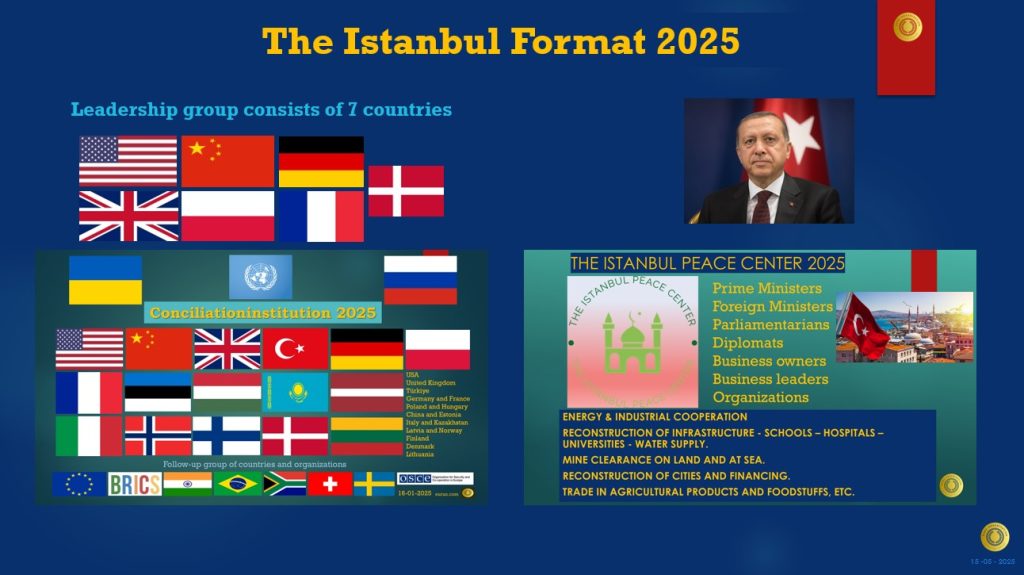
- Start permanent peace negotiations in Istanbul with 16 countries as mediators: USA, China, Turkey, France, Germany, UK, Kazakhstan, Poland, Hungary, Italy, Lithuania, Estonia, Latvia, Finland, Norway, and Denmark.
Closing: A Path to Peace
Three years have passed. Millions of Ukrainians have lost their homes, hundreds of thousands have died, and a whole generation of Russians and Ukrainians will grow up with hatred and pain. The Ukrainian people fight not only for their own future but for the stability of all Europe.
The Russian people have suffered under a system sending young men to die in a war they never asked for. The international community must understand that peace can wait no longer.
Reconciliation between Russia and Ukraine will be one of the most challenging diplomatic tasks of modern times. The Crimean Peninsula is a historic crossroads where coexistence should be prioritized. Donetsk and Luhansk have lost their Russian appeal, but autonomy may be a realistic path to peace.
If the world community wants peace, we must think beyond the logic of war. If Ukraine is truly to be protected, actions must replace empty words. If Russia and Ukraine are ever to find a future together again, we must build diplomacy with a long-term perspective.
The world has waited too long. We owe the Ukrainian and Russian peoples hope and faith in a brighter future.

Source: Copilot – The following investigation is conducted solely with Copilot. Any potential inaccuracies are unintentional, and this is an attempt to better understand the current war between Russia and Ukraine.
The Negotiations in Istanbul, March 28–30, 2022 — with Special Focus on Ukrainian Neutrality and Donbas Autonomy
Background and Format
- Time and Place: March 28–30, 2022 at Dolmabahçe Palace, Istanbul
- Host Role: Turkish Foreign Minister Hakan Fidan opened the negotiations
- Participants: Russia led by chief delegate Vladimir Medinsky; Ukraine represented by Mykhailo Podolyak
- Purpose: To break the deadlock in the war after the first month of invasion, discussing a ceasefire, borders, security guarantees, and institutional frameworks
Ukrainian Neutrality
- Russia’s Demands: Ukraine to forgo any affiliation with NATO and adopt permanent neutrality in its constitution
- Ukraine’s Counterproposal: Neutrality could be accepted—provided that at least eight third-party guarantor states (e.g., Turkey, USA, UK, France, Germany) offer binding security guarantees for Ukrainian independence
- Guarantee Model: These states would commit to defending Ukraine in the event of renewed aggression—a “non-NATO, but allied” security architecture
- Western Position: Public support for Ukraine’s right to self-determination, but reluctance to promise a permanently closed NATO door
Special Status (Autonomy) for Donbas
- Russia’s Demands: Immediate incorporation of “special self-governance” for Luhansk and Donetsk, including amnesty for separatists and veto power over national decisions in the region
- Ukraine’s Stance: Full restoration of territorial control and security guarantees first—only then could local autonomy be considered, as a reversible element in Ukraine’s constitution
- Key Difference: Russia aimed to “freeze” the conflict through swift legalization; Ukraine insisted on full reintegration before any decentralization
Other Main Agenda Points
- Ceasefire and withdrawal from Kyiv, Chernihiv, and Sumy regions (“drastic de-escalation”)
- Major prisoner exchange (the largest at that point in the war)
- Humanitarian corridors and restoration of basic services to occupied cities
Results and Follow-up
- No Final Peace Agreement: Talks ended without a binding treaty
- Both Sides Reported “Progress”: Russia cited reduced shelling; Ukraine emphasized Russian openness on neutrality
- Since mid-April 2022, top-level negotiations have been on hold and have not resumed
How Western Backchannel Diplomacy Shaped Ukraine’s Compromise Proposals at the March 2022 Istanbul Talks
What Is Backchannel Diplomacy?
- While official negotiations took place at Dolmabahçe Palace, an unofficial parallel dialogue was ongoing between Ukrainian decision-makers and representatives from the US, UK, France, Germany, and the European Commission
- Purpose: To test reactions to potential compromise proposals—including ones not yet formally presented—without publicly provoking Moscow or exposing divisions within the West
Key Western Actors and Channels
- USA: Sent National Security Advisor Jake Sullivan and envoy Kurt Volker for discreet meetings with Podolyak and Zelenskyy’s office, testing different phrasings on neutrality and security guarantees
- UK: Used Foreign Office diplomats and MI6 channels to refine the list of proposed British security guarantees (e.g., unprompted suggestion of UK air defense cover for 10 years)
- France and Germany: Provided technical assistance via embassies in Kyiv on how to frame “special status” for Donetsk/Luhansk without compromising Ukrainian sovereignty
- EU: High Representative Josep Borrell conducted informal bilateral talks to ensure eurozone support for a compromise involving “non-block status” instead of NATO membership
How Ukraine’s Compromise Was Formulated
- Neutrality: Ukraine was advised to frame its offer as a constitutional adjustment rather than an end to NATO aspirations—for example, using “non-aggressive alliance” instead of “neutrality.” This allowed Zelenskyy to maintain face domestically
- Security Guarantees: At Western initiative, Kyiv named eight guarantor states—not only the five permanent UN Security Council members but also smaller EU states (e.g., Belgium and the Netherlands), to spread risk and show broad support
- Donbas Autonomy: In technical workshops held in Kyiv and Geneva, Ukraine drafted constitutional language for “local self-governance” that would automatically expire if territory was retaken by Ukrainian forces—a reversible clause, seen by EU experts as essential to avoiding a frozen conflict
Typical Backchannel Methods
- Confidence-Building Briefings: Weekly, the US ambassador in Kyiv invited key legal advisors from the president’s staff to closed briefings on Russian red lines—without Russian surveillance
- Special Technical Missions: France sent legal experts to review security guarantee drafts; Germany offered infrastructure consultants to ensure Donbas reforms wouldn’t harm Ukraine’s national systems
- Discreet Telegrams: Podolyak and Medinsky exchanged unofficial notes via Turkey’s Foreign Ministry to adjust their positions before entering formal negotiations
Effects on the Compromise Space
- Ukraine’s Conditions Became Sharper and More Realistic: Rather than insisting on full NATO openness or zero local powers in Donbas, Kyiv adopted a flexible compromise range
- Western Unity Was Preserved: The backchannel bridged gaps between the US’s hard line and the EU’s cautious approach, denying Russia a chance to exploit divisions
- Political Cover: Zelenskyy could publicly claim he was presenting the toughest offer, while knowing that anticipated concessions had already been approved by Western partners
Why Early Compromise Proposals on Neutrality and Donbas Autonomy Collapsed – According to International and Ukrainian Sources (esp. Ukrayinska Pravda via Common Dreams)
Boris Johnson’s Direct Pressure
During a surprise visit to Kyiv on April 9, 2022, Boris Johnson reportedly gave Zelenskyy two clear messages:
- “Putin is a war criminal—we do not negotiate with him.”
- “If you make a deal with him, we might sign a bilateral guarantee agreement with you, but we will offer no guarantees to him.”
Consequence: Any neutral compromise was stigmatized as betrayal of the West, and Zelenskyy was strongly dissuaded from pushing for neutrality in the constitution
USA’s Implicit Rejection of Neutrality
There were no public statements from President Biden explicitly ordering Ukraine to abandon neutrality. However, the West’s continuous promises of military and economic support—“we will stand with you for as long as it takes”—made clear that Ukraine’s best security and sovereignty guarantees lay in ongoing military resistance, not early negotiations
- Thus, the idea of a “non-aligned” status was practically undermined, as Ukraine could not risk losing crucial support from the White House and Congress
Result: The mechanisms designed to secure binding neutrality guarantees and phased autonomy for Donbas lost momentum when London and Washington declared that a purely diplomatic settlement with Moscow was unacceptable. The hope for a balanced peace solution was overridden by promises of unwavering support for Kyiv’s continued resistance
The Budapest Memorandum on Security Assurances (December 5, 1994) – Source: Copilot
Under the so-called Budapest Memorandum on Security Assurances—signed in connection with Ukraine’s accession to the Nuclear Non-Proliferation Treaty and the dismantling/transfer of its nuclear arsenal—Russia, the UK, and the US made the following commitments to Ukraine:
- Respect for Ukraine’s independence, sovereignty, and existing borders
- Refrain from threats or use of military force against Ukraine’s territorial integrity or political independence—neither conventional nor nuclear weapons may be used against Ukraine, except in self-defense or in accordance with the UN Charter
- No economic coercion to undermine Ukraine’s sovereignty or force it to yield sovereign rights to third-party interests
- Commitment to request UN Security Council action if Ukraine becomes the victim of aggression or is threatened with nuclear aggression
These assurances were given in return for Ukraine’s transfer of approximately 1,900 strategic and tactical nuclear warheads to Russia and its disarmament under the START agreements (1994–1996)
What the Three Nuclear Powers (Russia, USA, UK) Specifically Committed to:
- No Threat or Use of Force: Signatories pledged never to threaten or use force against Ukraine’s territorial integrity or political independence—neither with conventional nor nuclear weapons, except in self-defense or per the UN Charter
- No Use of Nuclear Weapons: Parties agreed never to use or threaten to use nuclear weapons against Ukraine
- No Economic Coercion: Signatories committed not to use economic pressure to force Ukraine to surrender sovereign rights or submit to third-party control
- Mutual Consultation: If issues arose regarding fulfillment of the memorandum, the parties committed to consult to find a solution
- Appeal to the UN: If Ukraine was attacked or threatened—especially with nuclear weapons—signatories pledged to call on the UN Security Council to protect Ukraine
Conclusion:
Although Ukraine received pledges of respect for its sovereignty and assurances against aggression, the Budapest Memorandum contains no formal guarantee of military defense or intervention. It is therefore commonly referred to as a “political security assurance” rather than a binding defense commitment
This article is based on the author’s own research and has been developed with the support and review of AI tools: Copilot, Gemini, and ChatGPT.