In this article, I will reflect on the historical and economic conditions necessary to achieve peace and stability in Ukraine. The core question is whether we are trapped in a form of intellectual stagnation, where standardized security strategies overshadow innovative and pragmatic solutions.
This article is dedicated to Denmark’s Minister for Foreign Affairs, Lars Løkke Rasmussen, an exceptionally skilled negotiator with strategic abilities. With his extensive experience, political gravitas, and ability to balance complex diplomatic landscapes, he has established himself as a central figure in European foreign policy. The Minister’s understanding of geopolitical tensions and his capacity to navigate international forums make him a key figure in the efforts to restore stability and cooperation.

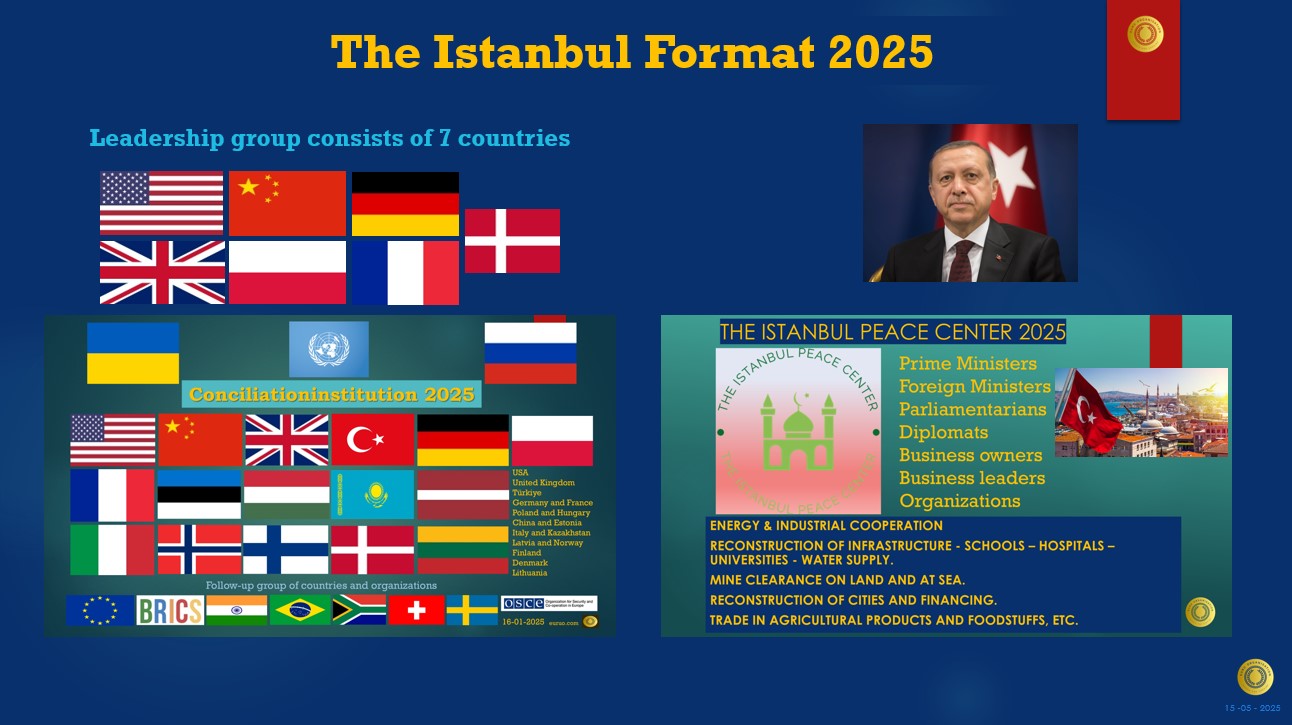
In light of Denmark’s upcoming EU Presidency, the country has a historic opportunity to promote a new peace dialogue between Russia and Ukraine. With Istanbul as a neutral negotiation framework and support from 16 mediating countries, the Minister for Foreign Affairs can take on a leading role in reactivating the peace process—based on equality, pragmatic dialogue, and mutual respect. Through its history and approach to cooperation, Denmark is uniquely positioned to strengthen trust between the parties and lay the foundation for a more inclusive security architecture in Europe.
The question that has been on my mind for months is whether our thinking has progressed beyond 1945 and if we are truly unable to use modern tools to resolve serious conflicts. When war is at hand, and you need two parties to reach an agreement, they must be able to see a tangible benefit and a politically viable exit strategy for themselves.
The question is whether we are overlooking some fundamental issues in our analysis and proposed solutions.
Looking back at history, we could not stand the communist system. And even after the Soviet Union peacefully dissolved, we were unable to naturally include that society and the Russian people into Western organizations. Both the Russian government and the Russian people desired closer relations with us after the fall of communism. However, the Russian government was met with demands rather than an embrace. As time passed and the country became more structured and economically prosperous under President Putin’s leadership, the proud Russian people and the Russian government felt we did not want them. We did not pursue an inclusive policy but instead showed arrogance toward the Russian government. This is how they perceived it, from their cultural standpoint. Millions of Russians were now minorities and in many cases, perceived as “second-class citizens” in the new nationalist countries, where the Russian language and culture were, we could say, suppressed. And as you know, historical sources make it clear that Russian politicians were told, in no uncertain terms, that if Germany were reunified, NATO would not expand eastward. These were clear political agreements and assurances to Russian politicians. It is useless today to claim that this is not documented in ratified international contracts. This is bull sh*t and completely unhelpful, showing a fundamental misunderstanding of the political mechanisms at a negotiation table where heads of state and foreign ministers meet. What is agreed upon in these forums are binding agreements for the countries when they leave the meeting rooms. It should also be noted that there are also notes in the USA that fully confirm this.
On one hand, it’s a matter of basic human psychology that the relationship between Russia and, primarily, the EU, UK, and USA is so poor. Just think about when Russia wanted to join NATO and the arrogance it faced. If we think about it, we must ask ourselves how a country that, about 32 years ago, wanted NATO membership and close economic ties with the EU can today be portrayed by Western politicians and the press as a country that might soon attack us.
If one fails to understand that the Russian government is not satisfied with the rights of Russian minorities in the former Soviet Union, it will be difficult to achieve peace. If one fails to understand that Russian politicians are furious about NATO’s encroachment on Russia’s borders, we will not achieve peace in Ukraine. Russia’s opposition to NATO expansion should not be interpreted solely as a military reaction; it also contains a geocultural response, marked by historical humiliation and a sense of cultural marginalization. If the West ignores this dimension, the potential for lasting diplomatic progress is weakened.
If we continue to insist that Russia can and will attack NATO countries within the next five years and broadcast this constantly, it will lead to economic stagnation in the West and make the task of achieving peace for the Ukrainian people, which we all desire, more difficult. The fact that the Russian government feels it has lost something with the dissolution of the Soviet Union and that it is unfortunate that so many Russians have ended up in “foreign” nationalist countries that do not value their language and culture, and do not allow them to be educated in a more Russian-oriented way, is painful for many people.
If one believes that the Russian government and the Russian people are so naive as to plan an attack on a NATO country, one does not understand that Russia is well aware of the consequences this would entail and does not have this on its agenda. The well-known Danish top diplomat and director of the Danish Ministry of Foreign Affairs, Friis Arne Petersen, has also stated that he does not foresee Russia attacking a NATO country, and Russia has never attacked a NATO country.
Although the Russian government has a historical veneration for the old Soviet Union and the peoples living in the border states around Russia, this is not the same as having planned to conquer land and subjugate these peoples. However, it is also understandable that the Baltic peoples are concerned, and that is another side of the matter.
The Path to Peace: Understanding Fundamental Russian and Ukrainian Concerns
Russian Foreign Minister Sergey Lavrov has repeatedly pointed out the need to “get to the root of the conflict” between Russia, Ukraine, and the West. His statements point to a deeper frustration over what Moscow sees as a disregard for Russian security interests and cultural identity. Among the most prominent Russian concerns are the treatment of Russian minorities in the former Soviet republics, especially in Ukraine, where issues of language, culture, and neutrality have been recurring themes.
Lavrov argues that Western expansion—especially NATO’s eastward advance after the dissolution of the Soviet Union—has undermined Russian strategic autonomy. In the Russian view, this development contradicts the informal guarantees that the West allegedly gave in connection with German reunification, leading to a growing feeling of encirclement and marginalization along Russia’s borders.
For genuine peace negotiations to begin, the international diplomatic community must acknowledge these fundamental Russian perceptions, without necessarily legitimizing them. A sustainable peace agreement requires that we both understand and address the concerns expressed by Lavrov and the Russian diplomatic corps—while also clearly stating that the annexation or constitutional subjugation of Ukrainian regions to the Russian Federation cannot be accepted in a rules-based international order.
It is crucial that Ukraine also receives full understanding and protection of its sovereign rights and territorial integrity. Its concerns, rooted in concrete experiences of military aggression and loss of territory, must not be set aside in a naive pursuit of compromise. The foundation of peace must be balanced: Russia’s demand for security must be met with Ukraine’s right to self-determination.
Only by integrating the existential concerns of both parties into one inclusive European structure—anchored in mutual respect, cultural diversity, and a revitalization of trade and diplomacy—can we emerge from the shadow of conflict and open the door to the reconstruction of Ukraine and a future where the Russian and Ukrainian peoples are part of a community characterized by solidarity rather than isolation.
When War Rhetoric and Rearmament Go Hand in Hand
When countries and regions begin to rearm, some natural mechanisms are set in motion within their respective administrations. Everyone must legitimize their right to exist, and directors gain higher status and more employees, and likely a higher salary, if they can point to a strong threat. The minister who can best argue for their ministry also gets more funds allocated. The press follows suit, willingly reporting on the threat and the dramatic escalation. In this way, military and organizational rearmament itself contributes to fanning the embers that can cause a major conflagration. Everyone must legitimize their right to exist: intelligence services, the navy, the air force, the home guard, and the army—and the list goes on. The same is, of course, true in Russia. If a department can carry out small, relatively innocent pinprick operations, they will also gain prestige and be allocated more funds. Thus, rearmament and the division into “the good and the bad” is a self-reinforcing crisis that can have fatal consequences.
Consider that in many EU countries, German is offered as a foreign language, which is not unnatural, but in Western Europe, Russian is typically only available at language schools or universities. What I wonder is whether we are still afraid to engage with the Russian system and the Russian people. If we are to have better relations and coexistence, it requires expanded trade and cooperation, better knowledge of the Russian language, and better travel opportunities between Russia and the EU, UK, and so on.
If we are to help Ukraine out of the terrible suffering it is enduring, completely new ideas and concessions are needed to achieve peace in the country. We cannot think as we did in 1945; we must have moved beyond that and have a better understanding of some of the mechanisms that must be met if we want lasting peace and prosperity in the region.
I was sad when I heard that the strong conservative German Chancellor Friedrich Merz said that Nord Stream 1 should not be reopened. As I see it, future energy trade is a necessity to achieve peace in Ukraine. We can buy oil and gas from Russia at competitive prices, but of course, we must have an alternative energy preparedness. It is necessary to build alternative energy routes. But above all, we must resume energy trade with Russia, as this is a fundamental basis for growth and prosperity in our own economies. This is a win-win situation.
Russia is a proud people and a strong military power. Since a very large part of the country’s exports is energy, it is crucial that these conditions are normalized, and it also shows that we are willing to pursue a far more inclusive policy toward the Russian people when hostilities cease. Russia must also participate in modernizing eastern Ukraine, and in this context, their economy should not be weakened but strengthened.
We must move on and not just think about statesmen and governments. It’s about people who must live and breathe every day in the best possible circumstances and have the opportunity, together with their families, to look forward to life and the future in prosperous countries that cooperate broadly.
It is also necessary that the companies that have left Russia, as far as possible, re-establish themselves in the Russian market. We must also clearly signal to the Russian people that visa rules will be simplified, so there will be mutual agreements that make it easy to travel between the countries. We must get out of the Cold War mentality. I have been fortunate enough to visit Russia, and it is my clear conviction that these people want peace and harmony.
Regarding Ukraine, we know that over 30 years ago, American leaders were clearly told that if Ukraine “broke away” or moved too far from Russia, this would have significant consequences, as the American ambassador to Moscow wrote. Secretary of State James Baker also inquired about these matters, and as early as the 1990s, he was afraid this could lead to war.
As I write these lines, I see that the Polish prime minister is saying that Russia could attack Europe in two years. Source: b.dk. Now I am thinking of a pamphlet or report I read from an intelligence service that stated, “The Warsaw Pact was a strong and cohesive military unit.” A few years after its publication, the WP was dissolved. But if we continue with war rhetoric and an irreconcilable approach to the Russian people, it will not take many random conflicts before things could go terribly wrong. The world and the course of things are very unpredictable. We do not know who the next president will be in Russia or the USA. In countries with an electoral system, the capriciousness and shifts in direction of the population are impossible to predict. In a time where coincidences can lead to undesirable outcomes, it places very high demands on heads of state and diplomats.
Now we are in a situation where a wholehearted diplomatic effort must be made. When I think of peace negotiations, I ask myself why 10 to 15 countries cannot come together and sit down to draft proposals for the Russian and Ukrainian governments and see if these suggestions can contain reasonable measures so that we get closer to ending the hostilities on the battlefield. Is it really a matter of prestige about who leads the negotiations or who calls for the negotiations? Or who gets the credit for the outcome, or loses face if no progress is made? I have said and shown that it is necessary to bring alternative new ideas, drafts, proposals, initiatives, or peace proposals to the table.
Center for Peace & Trade in Istanbul and Formalized Peace Negotiations in a Parallel Forum
I have specifically proposed that an institution be established in Istanbul where 16 countries collaborate to prepare proposals/drafts for the warring parties. These 16 countries should have a lead negotiator and a leadership group of countries. This can be a very robust and effective format.
I have also proposed that a Center for Peace & Trade be established in Istanbul where all countries can participate, as well as organizations, businesses, and more—all with the aim of rebuilding Ukraine and also providing useful suggestions to the countries that will be conducting the formalized peace negotiations. I have pointed out the importance of this being a permanent format stationed in Istanbul, with all 16 participating countries building a permanent secretariat and diplomatic presence on-site.
Furthermore, I have proposed that a new EU-NATO/Russia Council be established in Finland to work on future trade policy, geopolitical issues, and demilitarized zones at Russia’s borders, including a redistribution of foreign military forces at Russia’s borders, such as stationing American soldiers in only one place in Europe, for example, Germany. Disarmament and other matters should also be discussed in Finland, including the labor market, visa rules, and cultural cooperation with Russia. We must show the Russian people that we will pursue a far more inclusive policy. The American president has also suggested this, both in terms of trade and diplomacy.
I have written a great deal here about Russia and tried to see the world from Russia’s perspective. Regarding Ukraine, we know that over 30 economically robust countries provide military and humanitarian aid to the Ukrainian people. Additionally, there are over 20 countries providing humanitarian aid to the Ukrainian people. I hope that this support is sustained and that these countries will also participate in the reconstruction of Ukraine.
To me, it seems that Western opinion believes that the Russian people live only in a propaganda machine and are ignorant of most things. The proud Russian people are informed and, like us, have the internet and a stream of news. In Russia, the use of VPNs is also very widespread, so millions of Russians have the exact same access to the flow of information as we do. In Europe, we got newspapers in the 1600s, films around 1888, the internet in 1969, and the World Wide Web in 1991. The Russian people are just as informed as the rest of the world, but you act as if they live in another time.
The Russian people are a peace-loving people, and they do not march in lockstep, but based on their history, one can say that it is a silent majority. Russia does not build military bases around the globe, and neither does China, by the way. Just as we cannot predict the development in the USA or Russia or the rest of Europe where conservative forces are gaining ground, we can just as little predict the future of Central Europe. But if we continue on the path that is proclaimed daily by politicians, we are heading for a darker and poorer time that, as I see it, is completely unnecessary.
Have you considered that the Russian people travel to Thailand, Spain, Turkey, and European capitals for vacation and leisure? If one believes that one can sanction and isolate a country and achieve peace and positive coexistence, it must be said to be one of the most foolish strategies in recent diplomatic thinking.
It is strange that the American president should be the wisest and sharpest observer at the moment. Right now, he is saying in Scotland that mass immigration is a danger to Europe. The wise leaders in Central Europe and Spain have long since realized this. Hungary, Poland, the Czech Republic, and Slovakia have limited the reception of refugees and asylum seekers. (This does not refer to Ukrainian refugees, who are welcome in the EU.) Ukrainian refugees have generally been met with openness and support throughout the EU, especially after the 2022 invasion. They are not covered by the same asylum procedures but by the EU’s Temporary Protection Directive, which ensures quick access to residency and rights.
We must embark on a different diplomatic path. This diplomatic helplessness or laziness cannot last. For several months, I have tried to develop an action plan that can alleviate the situation and possibly help to thaw the inflamed atmosphere between Russia and the EU, and not least, the terrible war that the Ukrainian population is suffering from. As Russia’s economy shifts to a war economy and the country is met with long-lasting sanctions, this can also be felt by the Russian people.
If we look at the conflict soberly, neither of the warring parties benefits from it. After the dissolution of the Soviet Union, not even Gorbachev’s adviser could have imagined that there could be a war between the Ukrainian and Russian brother nations, as evidenced in a conversation he had with Secretary of State James Baker.
Today, the most difficult issue to solve in the conflict between Russia and Ukraine is probably Russia’s incorporation of Ukrainian regions into its constitution. Russia has enshrined the four Ukrainian regions/oblasts of Donetsk, Luhansk, Kherson, and Zaporizhzhia as part of the Russian Federation in its constitution. But as I said, I believe that those of you who will negotiate must focus on these core areas to get Russia to come to real negotiations:
- Greater autonomy for Donbass within Ukraine
- Ukraine maintains its neutrality, as the USA has also highlighted
- The Russian minority in Ukraine and the EU gets better opportunities to cultivate its own identity
- Frozen assets are released
- Trade and diplomacy are normalized
- The companies that have left Russia resume their activities in the country
- Energy trade is normalized when hostilities cease
- A new security structure at Russia’s borders
- Russia rejoins international banking cooperation
- Russia gets special representatives for Trade and Culture in Donetsk, Luhansk, Kherson, and Zaporizhzhia
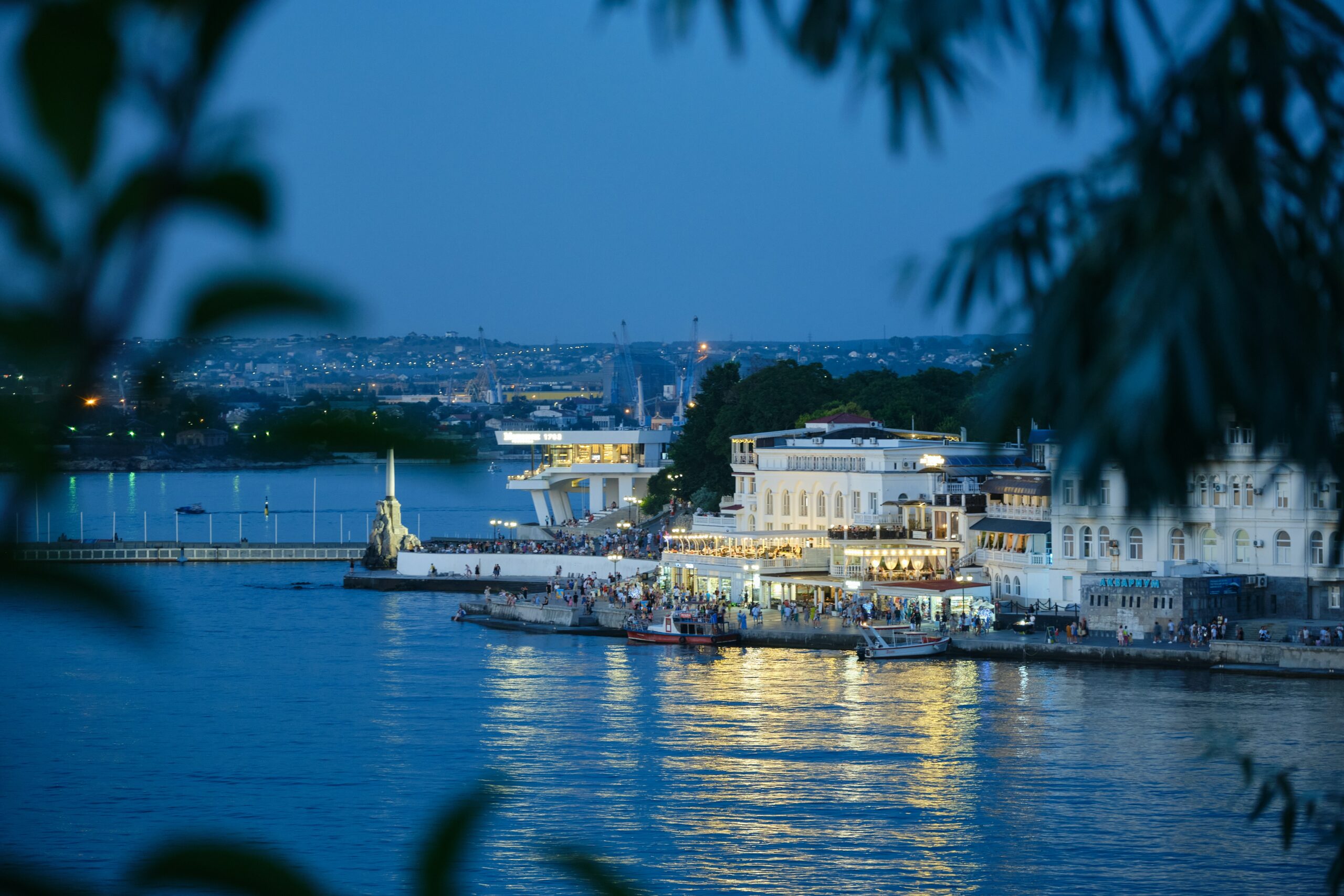
- Coexistence on the Crimean peninsula and preservation of the naval base
- Visa-free access up to 90 days in the EU for Russian citizens for family visits, vacations, and business trips
In addition to these points I have written today, I have, together with Copilot AI, tried to find 12 points that benefit the Russian population. Here is the result:
Key Points for the Russian Population
- Freedom of Travel and Mobility
- Visa-free access for up to 90 days in the EU for Russian citizens, making family visits, vacations, and business trips much easier.
- Direct flight routes between Saint Petersburg–Kyiv and Moscow–Lviv, certified by Danish and German aviation authorities.
- A “Peace Rail Corridor” train connection from Berlin via Warsaw to Moscow, making train travel fast, safe, and climate-friendly.
- A free border commuter regime between Saint Petersburg–Estonia and the Donetsk border region, promoting daily commuting and small trade.
- Economic Incentives
- 50% discount on freight transport between EU countries and Russian ports for at least three years to lower export and import costs.
- A five-year reduced tariff regime on reconstruction materials and machinery introduced by a joint fund secretariat (EU-USA-China).
- Business and Innovation
- Establishment of a “PeaceTech Accelerator” in Tallinn, where Russian and Ukrainian startups get access to Nordic investment, mentor support, and market contacts.
- A joint expert committee that recognizes Russian and Ukrainian professional certificates—from doctors to engineers—to facilitate job mobility across borders.
- Education and Culture
- “Erasmus East”: A study exchange program that sends Russian students to universities in Poland, the Czech Republic, Denmark, Lithuania, and Finland.
- Tri-national media and cultural centers in Kyiv with regular exhibitions, film festivals, and workshops in Russian, funded by the UK, France, and Poland.
These points are designed to create direct, tangible benefits for Russian citizens—from cheaper trade and new job opportunities to easier travel, study abroad, and cultural exchange.

My 60-Point Proposal for Future Peace Negotiations in Istanbul
The hope is for constructive cooperation where shared resources and experiences pave the way for a new era of peace.
- A negotiation format is established where the USA and selected countries participate. A permanent negotiation forum with direct dialogue between Ukraine, Russia, and international mediators. A permanent and formalized settlement institution is established in Istanbul.
- Only those countries and organizations that can accept this negotiation draft for a peace plan can participate in the settlement institution established in Istanbul. This ensures a constructive and targeted negotiation climate where all participants work toward a common solution.
- A ceasefire is introduced for the next 30 days, during which the points below are discussed.
- A step-by-step exit strategy with clear timelines for Russian military withdrawal is prepared. Russia must withdraw from the occupied territories in Ukraine and return to the Crimean peninsula.
- Russia retains its military base on the Crimean peninsula and enters into an agreement with Ukraine on this matter.
- Russia and Ukraine develop a plan for coexistence on the Crimean peninsula.
- Expanded autonomy for Donetsk and Luhansk, within Ukraine’s borders.
- Russia establishes six centers for trade and cultural exchange in Ukraine.
- Russia helps to rebuild these six areas: Luhansk, Sevastopol, Mariupol, Donetsk, Zaporizhzhia, and Kherson.
- Russia sends special envoys for trade and culture to these selected oblasts in Ukraine: Kherson, Zaporizhzhia, Luhansk, and Donetsk.
- Russia and Ukraine initiate a prisoner exchange.
- A plan for refugees and the return of Ukrainian citizens who have ended up in Russia is established.
- The rights of Russian minorities in the EU and Ukraine are formalized, including language, culture, and education.
- Possible dual citizenship in selected areas of eastern Ukraine.
- The Zaporizhzhia nuclear power plant becomes a demilitarized zone where the USA cooperates with Ukraine on its operation, maintenance, and safety.
- Ukraine contributes to a sufficient water supply for Crimea from Kherson.
- The Russian Rosselkhozbank gets access to the international payment system SWIFT.
- Russian politicians and business owners cannot be prosecuted in connection with the Russian invasion of Ukraine.
- Russian cargo ships get better access to European ports and the international insurance system.
- The ammonia gas pipeline is reopened.
- Ukraine gets the opportunity to export grain again.
- The USA and Ukraine enter into an agreement on mining and energy cooperation.
- The USA is responsible for the security of the mining operations.
- Maritime mine-clearing tasks are undertaken.
- No foreign troops on Ukrainian soil in peacetime.
- 50,000 unarmed peace observers are deployed to Ukraine.
- Discussions are held on future trade policy and interaction in Europe.
- An EU-NATO-Russia Council is established in Finland, tasked with working on geopolitical issues, as well as trade and visa policy between Russia, the EU, and the UK.
- A plan for the reconstruction of Ukraine and its financing is created (over 50 countries participate).
- A new security structure in Europe is negotiated in Finland.
- Russia gets security guarantees at all its European borders.
- A new agreement on weapons inspections in Europe is made.
- Demilitarized zones on land, at sea, and in the air at the borders in Europe are created.
- No military exercises near each other’s borders are held.
- Ukraine gets strong security guarantees from its allies, which are internationally ratified (approx. 30 countries are behind the agreement).
- Ukraine is free to enter into trade agreements with countries and organizations.
- Energy cooperation between Russia and the rest of Europe and Ukraine is restored.
- Nord Stream 1 and 2 are re-established.
- Germany and other countries commit to buying energy from Russia again.
- All sanctions against Russian businesses and individuals are lifted.
- Russian frozen assets are released.
- The companies that have left Russia commit—as far as possible—to re-establishing their businesses and activities in the country.
- Compensation for Ukrainian citizens who have lost property in Crimea is provided.
- Russia rejoins international payment systems.
- International support for the reconstruction of Ukraine and economic compensation from Russia for war damages is provided.
- Access to food and the protection of export routes for grain and other foodstuffs are secured.
- Energy security is ensured, including the reconstruction of Ukraine’s energy infrastructure.
- Russia and Ukraine enter into a trade agreement, including gas deliveries from Russia.
- The Kerch Bridge, which connects Russia and the Crimean Peninsula, plays an important role and should be integrated into the traffic system for the benefit of both parties.
- Visa rules for Russian and Ukrainian citizens to the EU and UK are eased.
- The EU enters into an expanded trade agreement with Russia, Ukraine, Great Britain, Moldova, and Belarus (over 260 million people).
- A Trade & Peace Center is established in Istanbul to coordinate Ukraine’s reconstruction and financing.
- The possibility of establishing dual citizenship for the 4+1 regions: Donetsk, Luhansk, Kherson, Zaporizhzhia, and the Crimean Peninsula is explored.
- A detailed decentralized self-government model for Donetsk and Luhansk is defined.
- A comprehensive minority protection law that recognizes both Ukrainian and Russian-speaking citizens, both in Ukraine and in the old Soviet Republics, is introduced.
- A neutral, international monitoring mechanism for the implementation of the peace agreement is established.
- EU countries re-establish normal trade and diplomatic relations with Russia.
- Resident democracy is guaranteed by establishing local dialogue forums where residents actively participate in decision-making processes in eastern Ukraine.
- An independent truth and reconciliation commission is established with representatives from Ukraine, Russia, and international civil society to document war crimes, address the suffering of victims, and promote an inclusive, national reconciliation process.
- A joint peace and future platform is established that brings together Ukraine, Russia, and international partners to shape a sustainable and just post-war order. The platform should create hope and engage populations through constructive dialogue, based on learning from the wounds of the past and a shared striving for a safe, dignified, and peaceful future, where visions for sustainable growth, culture, and innovation are developed. This peace and future platform should function as a neutral forum where all parties together create the conditions for a fair and sustainable reconciliation process that ensures a safe and dignified future for both countries and their populations.
These 60 points cover legal, political, economic, and cultural aspects and are intended to contribute to an inclusive and lasting peace process, which provides a reasonable exit strategy and a mutual recognition of both parties’ needs, with a foundation for stability and long-term reconciliation. Translatete Gemini AI