We are once again witnessing that it is only the American President who takes the initiative to try to bring the fighting on the front in Ukraine to a halt, and hopefully he will raise this in conversations with the Chinese President so that he too will provide support for achieving peace in Ukraine by putting pressure on Russia.
The European leaders who have promised to help Ukraine must remain focused on this task, namely to deliver additional air defense and to supply ammunition in the quantities they have pledged. They must help to expand the air defense in order to protect against Russian drones and missiles that strike Ukrainian cities and residential areas far from the front line every single night.

In Europe, there is an ongoing discussion about whether Russia might in the future consider attacking NATO’s eastern flank. But it is important to stay focused and help the Ukrainian people in this difficult time.
European leaders suffer from a fear of taking on a significant role in upcoming peace negotiations. Therefore, private initiatives are not only desirable; they are necessary. Retired diplomats, think tanks, business and civil society actors can jointly draft realistic proposals for peace settlements — drafts that can be presented to the warring parties and serve as working documents for official negotiations. These parallel tracks can create political space and technical depth that formal, official channels often lack.
The point of departure must be the Trump Doctrine — namely that, once hostilities have ceased, normal trade and diplomatic relations with Russia must be established, so that both the Russian government and the Russian people can feel that we will pursue an inclusive policy of cooperation once they have stopped the fighting.
The Trump Doctrine also contains a foundation based on the idea that Russia remains on the Crimean Peninsula and that Ukraine remains militarily neutral. Furthermore, he has said that hostilities should end along the current line of contact, after which negotiations should begin. Both the Ukrainian President and Ukraine’s allies in Europe have agreed to this.
A private peace initiative would be based on the idea that both the Ukrainian and Russian peoples should see their lives improve once hostilities have ceased, and that the populations of both countries should regain faith in and look forward to a brighter future characterized by prosperity, cooperation, and trade within Europe.
Of course, the European countries must maintain a sensible defense and alternative energy supply lines, but at the same time we must not forget that the foundation for lasting peace and stability is cooperation and interaction between states and peoples.
We cannot ignore that the situation is unique following the dissolution of the Soviet Union and the aspirations Russia has had for the period after 1991. We must acknowledge that there are large Russian minorities in several independent states established after 1991. We must also recognize that Russia does not wish to have NATO troops stationed at its borders, nor that we conduct military exercises along each other’s borders. We must also understand that European political leaders, in past negotiations, have solemnly assured Russian politicians that after Germany’s reunification, NATO would not expand eastward.
When it comes to Ukraine, everyone who has studied even a little bit of history and the post-1991 situation knows that it was a deeply emotional and special issue for the Russian people whether Ukraine and the Ukrainian people would move too far away from the Russian sphere. In eastern Ukraine, there was a widespread desire for close relations with Russia. Today, the situation is different.
To help the Ukrainian people, we must view the Russian complex as a whole, and we must stop making bombastic statements claiming that Russia will soon intensify hybrid warfare against the West or carry out pinprick operations against the Baltic States or Finland. It is therefore pointless to talk about Russia attacking Europe. Even James Baker recognized that a war could arise if Ukraine moved “politically and culturally” too far from Russia. The “first” bulletin sent home from the American ambassador in Moscow after 1991 read, loosely translated: “One thing is that communism has fallen; another is whether Ukraine drifts out of the Russian sphere.”
We also know today that the Russian top diplomat Mr. Yuri Viktorovich Ushakov, who served as a Russian diplomat in Denmark and, incidentally, speaks fluent Danish, said to a Danish diplomat that if Ukraine were to move away from Russia “culturally, politically, and in terms of trade, it would be very unfortunate and would be perceived as a problem.”
Thus, more than 30 years ago, we already knew that Ukraine is something quite special to the Russian people, and that the Baltic countries cannot be compared in this context. Whatever the Russian President may have said in a speech in Munich is not the same as him wanting to subjugate the former Soviet Union.
The Russian President is well-informed and rational; therefore, the Russian side is far more predictable than our relationship with America. The dynamic American President is, in fact, the opposite of the Russian President — he is very unpredictable. But he is absolutely right when, based on the information he receives from his intelligence services and his deal-oriented foreign policy, he arrives at the following:
The Trump Doctrine
Hostilities must end along the line of contact; “soldiers must return home to their families.” Ukraine remains militarily neutral; a form of coexistence is established on the Crimean Peninsula; we must normalize relations with Russia and resume trade and diplomatic ties. Europe must provide security guarantees to Ukraine, and Europe must be able to defend itself and finance its own rearmament.
I see it as a very important signal that European leaders are beginning to soften, and that the German Chancellor is opening up to the idea that if Russia ends the war and withdraws its forces back to the Crimean Peninsula, Germany will be ready to buy Russian oil and gas again and reopen the Nord Stream 1 pipeline. This is a very important signal to send to the Russian people and can help the Ukrainian people achieve peace in their country.
If we are to reconcile the Trump Doctrine with what Ukraine and its allies desire, then Russia must make the necessary concessions regarding Kherson and Zaporizhzhia, and as a compromise, Donbass could be granted expanded autonomy in matters of culture and trade.
For Russia to safeguard the rights and interests of Russian minorities in Ukraine, Russia could have special representations in Luhansk, Donetsk, Kherson, and Zaporizhzhia that would handle culture, trade, language, education, and future cooperation between the countries.
In addition, we must establish demilitarized zones. All countries bordering Russia should have 100 km zones on both sides of the border. We should also propose that only the national forces of each state be present within their own territories. The United States should have military forces stationed in only one country in Europe — namely Germany.
Now we have a model that can be presented to the countries, but the problem is that we currently lack alternatives or nuances. In the outline above, Ukraine has made significant concessions, and Russia is able to protect its interests in the country on behalf of its minorities there.
Russia has often emphasized that all aspects must be included in order to find a solution — and I agree that this must be achievable if European leaders are willing to soften their stance to make the geopolitical situation in Europe functional again.
We need demilitarized zones; we need to enter into dialogue with Russia through an EU/NATO–RUSSIA COUNCIL.
I know that the Ukrainian President has said that modern warfare is of such a nature that demilitarized zones are ineffective, but in Europe and at the front in Ukraine, we must enter into such agreements to achieve détente, based on diplomatic and geopolitical considerations.
When We Think in Institutional Solutions, We Must Take the Following Realities into Account
We know that Russia would not silently accept the following circumstances:
- Broken promises in connection with Germany’s reunification
- NATO’s eastward expansion
- The deterioration of conditions for Russian minorities in the Baltic states
- The Maidan Revolution
- Ukraine’s rapprochement with NATO
- The Ukrainian Church’s “separation” from the Russian Church
- The Biden and Johnson administrations’ “support” for Ukraine during the early talks in the Russian invasion (the negotiations took place in March 2022 in Istanbul)
- The rights of the Russian minority in Ukraine: language, culture, etc.
- The rights of the Russian minority in the Baltic states: language, culture, etc.
- NATO forces stationed along all of Russia’s borders
Note: The Istanbul Negotiations
• USA: Supported the negotiations, but with reservations and a focus on Ukraine’s sovereignty.
• UK: The Johnson government did not want an agreement that could be interpreted as appeasement toward Russia and emphasized continued resistance and support for Ukraine.
These positions reflect a broader Western strategy, in which diplomacy was viewed as secondary to military and economic pressure on Russia.
(Source: Copilot AI and my examination of other sources.)
Russia does not want a ceasefire but wants the fundamental and underlying issues clarified and resolved — and I can well understand their line of thinking, which is also reflected in the Trump Doctrine. Furthermore, the Russian minority must be given better opportunities to cultivate its language and culture.
To help the Ukrainian people escape these tragic circumstances — the daily bombardments of cities and the loss of Ukrainian soldiers on the battlefield — it is necessary that any peace proposal also considers Russian history and views the conflict through their perspective, even though the West and Ukraine do not agree with all of its interpretations.
Those who desire peace must make so many and such extensive concessions to the Russian government and the Russian people that they will want to end the hostilities in Ukraine. And the proposals from the international community must simultaneously be communicated directly to the Russian people.
No one is saying that Ukraine must give up land in exchange for peace, and no one is saying that Ukraine cannot become a member of the EU — but Russia’s desire to resolve the deeper and underlying issues must also be taken into consideration.
The China Issue
We have an ambivalent relationship with global trade: we are willing to buy goods from China, which supports Russia, yet we are not willing, after the end of the war, to establish normal trade relations with Russia.
Today it is a fact that while we are helping to finance Ukraine, China is earning profits by selling goods to both us and Russia — thereby strengthening itself while weakening our own position. Donald Trump has now spoken with the Chinese leader and will hopefully persuade him to become a participant in resolving the conflict so that the suffering of the Ukrainian people may come to an end.
International Observers to Ukraine Now
The time has come for China, India, Hungary, South Africa, and European countries to send observers to Ukraine to document what is happening and to report to their respective governments and an international body.
We must, here and now, send 10,000 international unarmed observers to Ukrainian cities. The groups of observers should rotate between the cities. We may expect that Russia’s willingness to drop heavy glide bombs, drones, and missiles on Chinese international observers will be limited — and thus this would also spare the Ukrainian people.
The Path to Peace Lies Through Trade – Not Isolation
The Ukrainian and Russian peoples seek belonging with the rest of Europe
Economic Cooperation Is Europe’s Strongest Tool Against Conflict
World history teaches us a clear truth: close economic exchange and mutual interdependence are the strongest drivers of peace and stability. When nations and societies are bound together through trade, investment, supply chains, research collaboration, and extensive human exchange, the real and material costs of armed conflict rise dramatically. Political leaders, businesses, and the wider population all gain tangible reasons to maintain functional relations rather than escalate into open confrontation.
This peace-promoting effect is confirmed by everyday reality. Citizens of Russia, Ukraine, and the rest of Europe are deeply integrated into global networks. They travel, work, and study across the world — in cities such as London, Paris, Vienna, and New York, and at popular holiday destinations such as Spain, Turkey, and Thailand. These movements create a tightly woven network of families, business links, and academic relationships. The Russian people are an enlightened people with access to global media, and like the Ukrainian people, they wish to be an integral part of the European family. They do not want isolation. These social bonds are in themselves a compelling argument for keeping channels between societies open, as they are extremely difficult to rebuild once destroyed by conflict.
It is often claimed that extensive trade with Russia did not help, since the attack on Ukraine took place nonetheless. This analysis rests on a false premise. Historical experience shows that shaming, isolating, or deliberately weakening a state’s economy often has the opposite effect of what was intended. Economic exclusion can undermine moderate forces, erode social trust, and provide fertile ground for radical or revanchist movements. Punitive measures that generate frustration and loss of legitimacy increase the risk of future tensions rather than ensuring lasting stability.
We must begin to read history through the right lens. As the distinguished Danish diplomat Friis Arne Petersen has pointed out in Danish media, Russia has never attacked a NATO country, and NATO is now stronger than ever with Finland and Sweden as members. The solution for future security lies in open economies and interaction between businesses and individuals, including tourism. The only sustainable path forward is to ensure that all European economies continue to achieve stable annual average growth. A sense of economic progress and advancement is the very foundation of peace and stability in Europe. The current policy among European leaders, which isolates countries and exhausts their economies, is not a viable path; history shows us that it is the root of future conflicts.
The Historical Duty and the Free Peoples of the Future
In this complex situation, we appeal to Europe’s leaders to remember the long-term lessons of history. While our support for the Ukrainian people in this difficult time is morally, economically, and politically imperative, we must avoid creating new, lasting divisions on the continent.
The Russian people carry a recent and heavy past, having fought their way out from under the burden of communism. After decades of isolation and restriction, they must not once again be isolated from the European family. We must not forget that the Russian people, at their core, also desire freedom, prosperity, and the same opportunities for interaction, education, and mobility that the rest of Europeans enjoy.
Peace negotiations and long-term mediation require a vision that reaches beyond the present conflict. Lasting peace can only be achieved if it includes a forward-looking perspective — one in which the entire continent, including both the Ukrainian and Russian peoples, can thrive in mutual respect and economic integration. Our historical duty is to choose engagement over exclusion.
Dear readers, it is often emphasized that we have had extensive trade and cooperation with Russia, yet this did not help — they attacked Ukraine anyway. This analysis is mistaken and unrelated, as I have demonstrated in this article.
With the utmost respect and humility, I ask for your attention: there is only one way forward, and that is to ensure that all European economies continue to experience an annual average growth of at least 2–3%, so that people and nations feel progress. This is the foundation of peace and stability in Europe.
If a private initiative is to be established, these are some of the ideas that will underpin it. An essential element is that we must re-establish normal trade with Russia. The companies that have left the country should, as far as possible, resume their activities there. China should be an active participant in future peace initiatives.
Both Russia and Ukraine must see an exit strategy from this conflict, and here both the Baltic states, the EU, and NATO must offer general concessions that lie outside Ukraine itself but are an essential part of the broader disagreements with Russia.
International Observers to Ukraine Now
I am aware that Ukraine’s President is not particularly pleased with the participation of Chinese observers in the international mission of unarmed observers that must be deployed to Ukraine to document and protect Ukrainian cities from nightly Russian drone and missile attacks on cities and residential areas.
Draft – 31 October 2025
22 Selected Points in a Peace Plan
- Unarmed international observers enter the country
- Hostilities stop along the contact line
- Exchange of prisoners & return of children and refugees who ended up in Russia
- Extended autonomy for Donbas in the fields of culture and trade
- Ukraine remains militarily neutral
- Coexistence on the Crimean Peninsula
- Russia sends special envoys for trade and culture to eastern Ukraine
- The Baltic states and Ukraine respect minority rights: language, culture, education
- Russia participates in financing the reconstruction of selected cities
- Ukraine receives security guarantees from 30 countries and the USA
- Ukraine receives reconstruction support and funding from over 50 countries
- Frozen Russian assets are released
- Companies that left Russia re-establish their activities there, as far as possible
- All sanctions against Russia are lifted
- Demilitarized zones of 100 + 100 km are established along all Russian borders
- No military exercises are conducted near Russia’s borders
- Normal diplomatic relations are re-established between Russia, EU countries, the USA, and the UK
- Trade within Europe is normalized
- Only national forces are stationed in countries bordering Russia
- A ceasefire is concluded
- Unarmed international peace observers are deployed to Ukraine
- Russian troops withdraw to the Crimean Peninsula
Coexistence on the Crimean Peninsula
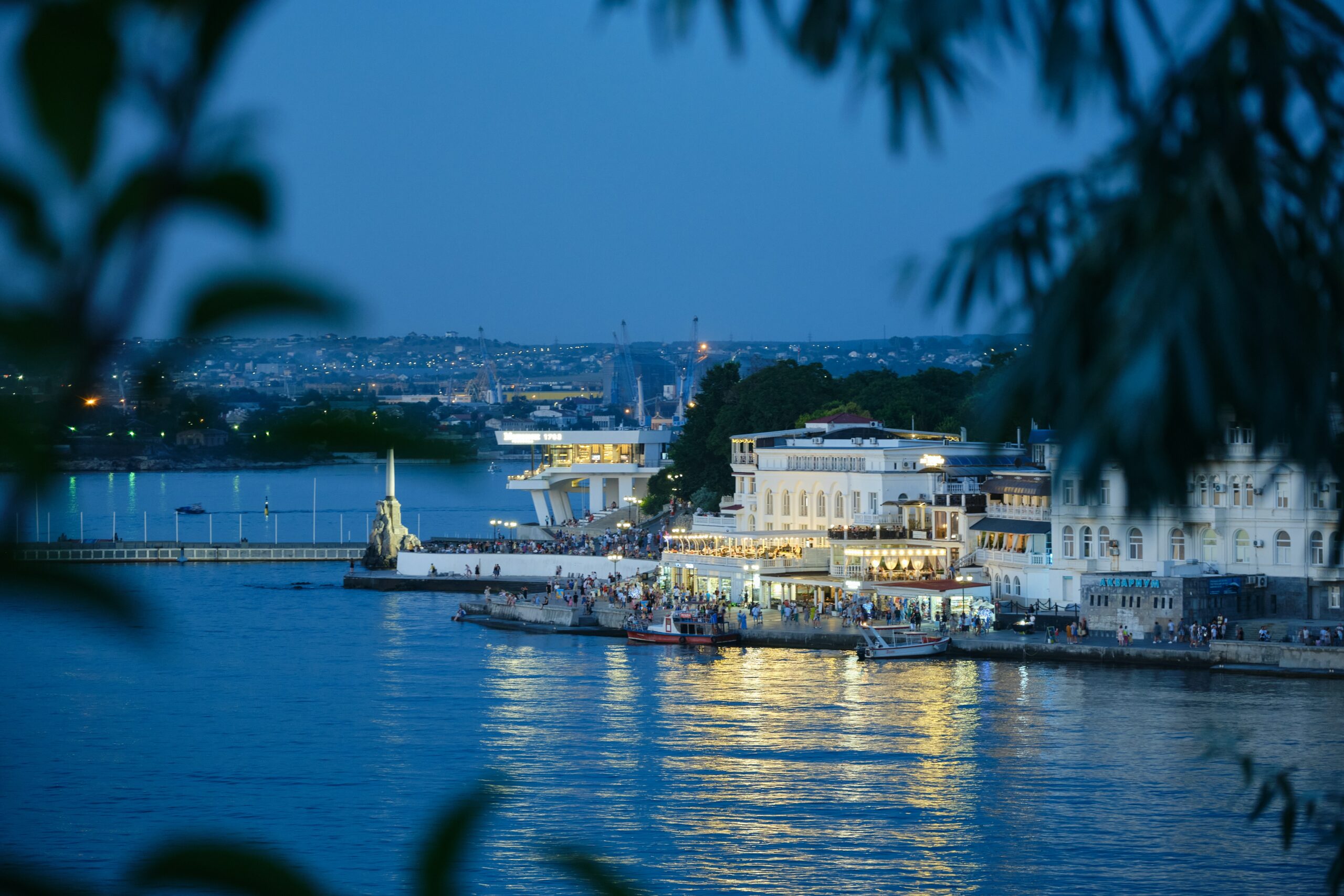
“The Crimean Peninsula shall be recognized as an area with special status, where both Ukraine and Russia commit themselves to peaceful coexistence. The Russian naval base in Sevastopol shall remain stationed under a long-term agreement, while the local population shall be offered the option of dual citizenship (Ukrainian and Russian). The final administration of the area shall be managed through joint mechanisms ensuring respect for both parties’ interests, cultural rights, and security needs.”
What is proposed here could serve as a beginning — a way out of the unsustainable security conditions and a step toward de-escalation of the threat landscape across Europe.
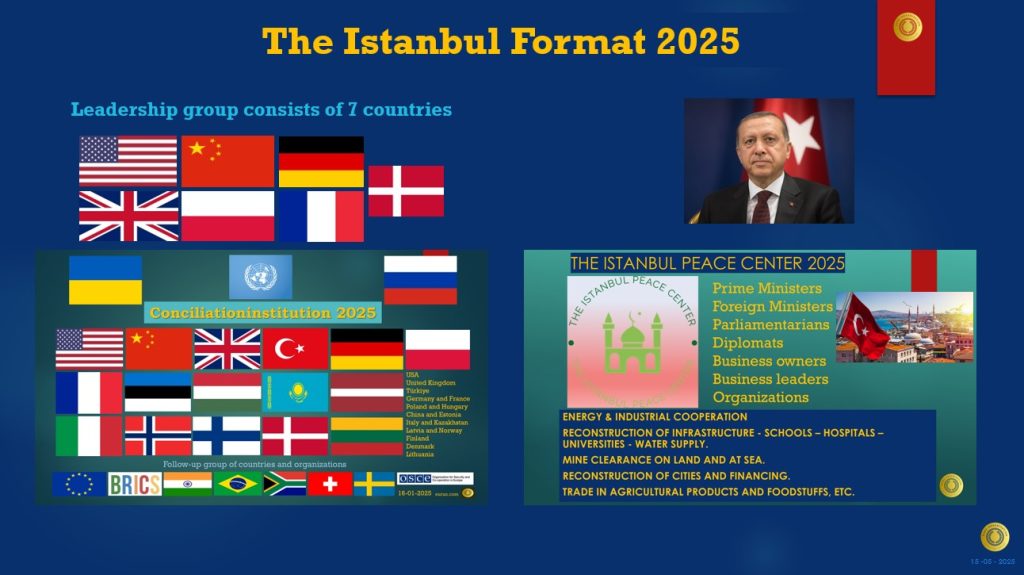
It is obvious that these initial meetings should be held in Istanbul. If both Russia and Ukraine can agree on the above points, the groundwork will be laid for continued peace negotiations in a fixed format, as I have also proposed. The 60-point peace plan I have developed, available on this site, can serve as a reference.
The time has come for the countries bordering Russia, together with selected mediators, to establish a permanent diplomatic format for ongoing and sustainable peace negotiations between Russia and Ukraine.