As we approach the summer of 2026, we observe a rare and crucial window for diplomacy. Recent signals from both Kyiv and Moscow reflect a growing recognition that the path toward stability requires new frameworks. With the onset of summer, there is renewed hope that a spirit of cooperation may prevail for the benefit of both the Ukrainian and Russian peoples. In recent days, both presidents have signaled a desire to bring military operations to a conclusion, creating a historic opening for peace.
In this context, it is particularly noteworthy and commendable that U.S. President Donald Trump, through his resolute diplomacy, has succeeded in bringing the parties together to establish the current ceasefire. This decisive breakthrough has provided the world with a necessary respite and created the foundation of stability that is a prerequisite for any lasting political solution.

Strategic Context and the Sovereignty of the Ukrainian Will
In the current diplomatic landscape, several critical parameters have emerged that necessitate a more nuanced approach to the forthcoming negotiations. President Putin has indicated a readiness for a bilateral summit with President Zelenskyy once a definitive peace accord is prepared for signature. While Moscow acknowledges the constructive role of the United States as a mediator, it maintains that the ultimate resolution must be forged directly between the two primary belligerents. Furthermore, the Russian proposal for former German Chancellor Gerhard Schröder to represent European interests in these proceedings remains a key point of discussion.
It is recognized that certain parameters—specifically regarding Ukraine’s relationship with NATO and the continued Russian presence on the Crimean Peninsula—are currently treated as “fixed” constraints, largely following the clear stipulations set forth by the U.S. Presidency. These conditions are, as such, already established in the current diplomatic calculus.
However, a sustainable peace cannot be achieved by dictating terms to Kyiv. The Ukrainian leadership, supported by the resolve of its people, has remained steadfast: there will be no exchange of territory for peace. Furthermore, Ukraine will not compromise on its strategic fortification belt in the East—a position in which their European allies are in full agreement. Forcing concessions on these core issues is counterproductive; the negotiations must instead reflect the factual realities and the legitimate security needs of the Ukrainian state.
From a broader European perspective, it is imperative that the EU, as a vital economic power, exerts greater pressure to engage China as an active partner in these peace efforts. Simultaneously, it is incumbent upon the EU, the UK, and Norway to communicate clearly to Washington that they will not endorse a resolution that facilitates a capitulation to maximalist Russian demands. Europe must not remain trapped between the competing interests of the United States and China; it must act in its own right as a primary stakeholder in regional stability.
To achieve truly balanced diplomacy, it is essential that the U.S.-appointed peace envoys visit Ukraine to engage directly with the government and the people. Only by witnessing the actual conditions on the ground can they facilitate a process that respects the local reality. Ultimately, the sovereign will of the Ukrainian people remains the final arbiter of any peace settlement with Russia.
This 26-point proposal, drafted by EURUO.COM, is intended as a streamlined and harmonious framework to inspire the forthcoming negotiations. The objective is to provide a comprehensive document that can serve both as a point of departure for official dialogue and as a clear message to the respective populations that a peaceful and sustainable future is within reach. For those seeking further technical depth, more detailed peace drafts are available at EURUO.COM to supplement this proposal.
It is my hope that this draft will contribute to building trust, fostering deeper dialogue, and becoming an active component of the negotiations that must now bear fruit.
26-Point Peace Framework
- Ceasefire: A general ceasefire shall be maintained for the duration of these negotiations.
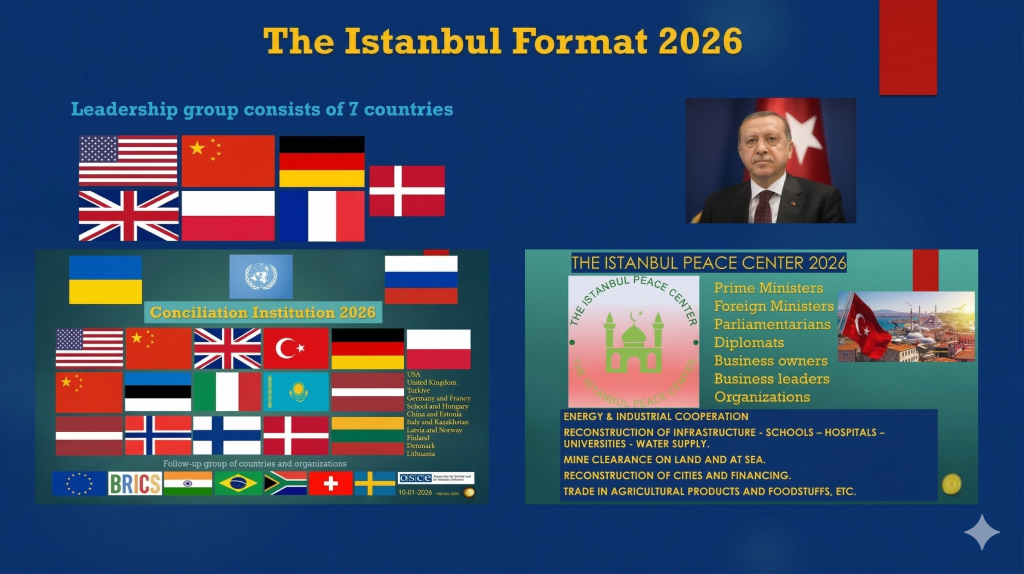
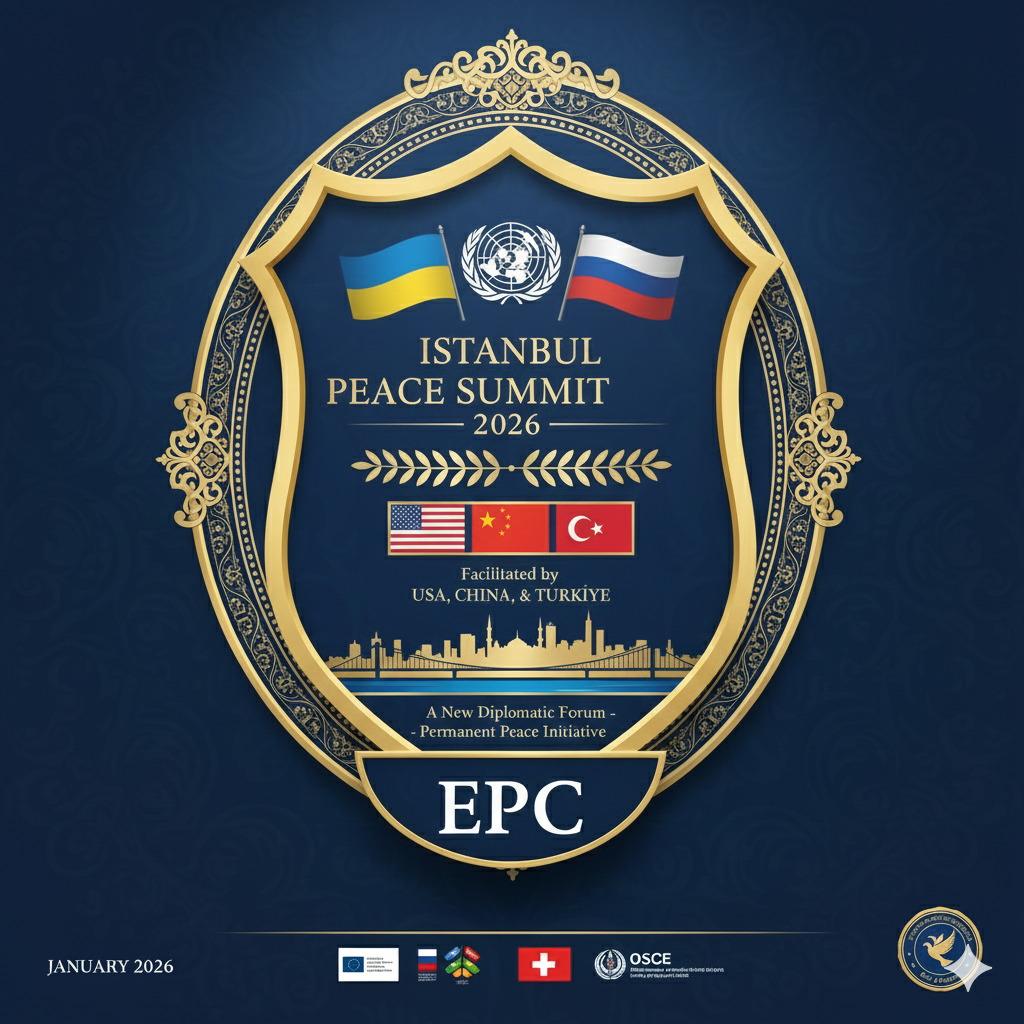
- Venue: It is proposed that peace negotiations be held in Türkiye, serving as a neutral host with significant experience in mediation and the necessary logistical capacity.
- Peacekeeping Force: A neutral, international peacekeeping force of 10,000 personnel shall be deployed immediately under a multilateral mandate to monitor the ceasefire, protect civilians, and ensure humanitarian access.
- Prisoners of War: All prisoners of war shall be repatriated to Ukraine and Russia.
- Minors and Refugees: All children and refugees currently located in Russia shall return home.
- Minority Rights: The Russian minority in Europe shall be guaranteed enhanced opportunities to preserve and practice their language and culture.
- Autonomy for Donbass: Donbass shall be granted expanded self-governance regarding language, trade, and culture.
- Crimean Coexistence: A model for peaceful coexistence between Russians and Ukrainians on the Crimean Peninsula shall be developed.
- Citizenship: Citizens on the Crimean Peninsula and in Donbass shall be granted the option of dual citizenship.
- Demilitarized Zone: A demilitarized zone in Eastern Ukraine shall be negotiated based on the current line of contact.
- Border Security: Both states commit to the demilitarization of the border zone for a period of 10 years; no heavy weaponry shall be permitted in the demilitarized zone. Security shall be maintained solely by regular police, border guards, and customs/passport control.
- Nuclear Status: Ukraine shall refrain from stationing nuclear weapons on its territory.
- NATO Status: Ukraine shall refrain from seeking NATO membership. The signatory parties may revisit this matter in 2040.
- Foreign Forces: Ukraine shall not permit the stationing of foreign forces on its soil during peacetime.
- Security Guarantees: Approximately 30 nations shall provide firm, ratified security guarantees to Ukraine.
- Resources and Security: In areas of Eastern Ukraine where Ukraine and the United States cooperate on mining and resource extraction, the U.S. may provide the necessary security.
- International Reconstruction: More than 50 nations commit to participating in and financing the modernization and restoration of infrastructure in Ukraine, including hospitals, schools, and housing.
- Energy Supply: EU member states shall again be open to sourcing portions of their energy supply from Russia.
- Release of Assets: Frozen assets shall be released once Russian military forces are restricted solely to their bases in Crimea.
- Financial Reintegration: Russia shall reintegrate into the international financial markets, including access to international payment solutions.
21. Lifting of Sanctions Against the Russian People
- Normalization of Civilian Life in Europe: All restrictions affecting the daily lives, freedom of movement, and access to global markets for the Russian population shall be lifted to re-establish natural ties with the rest of Europe and the United States.
- Resumption of Natural Trade: Trade between Russia and Ukraine shall be restarted with a focus on mutual respect and equality; the exchange of vital resources such as grain, fertilizer, and energy shall be reopened as a cornerstone of regional stability.
- The United States as a Bridge-Builder: The restart of economic relations shall be prioritized, with the U.S. acting as an active facilitator for trade and diplomacy.
- Russia as a Partner: Russia is recognized as an essential actor in resolving regional and global challenges. As a major power and a European nation, Russia shall engage in dialogue and cooperation regarding energy, climate, and security.
- NATO-Russia Relations: Trade and cooperation between NATO member states and Russia shall be normalized.
- Return of the Private Sector: Companies that have withdrawn from Russia are encouraged to resume their activities in the country wherever possible.
- Institutional Cooperation: A new EU-NATO-Russia Council shall be established, headquartered in Finland (focusing on Trade & Geopolitics).
- Financing: Russia shall participate in the financing and reconstruction of selected areas in Eastern Ukraine.
26. The European Prosperity Pact and Civil Reconstruction
- Foundation for the Future: A coordinated reconstruction package from the EU, Norway, the UK, and the USA focusing on the reopening of modern hospitals, the rebuilding of safe schools, and the guarantee of stable electricity and heating for all households.
- Market Access: Ukraine shall be granted prioritized access to selected European trade programs and the internal market.
- Social Stability: Direct financial support shall be provided to ensure the continued functioning of society, securing wages for teachers, doctors, and public servants during the modernization process.
Conclusion
The Necessity of Diplomacy and the Role of Mediation The Russian President has suggested that former German Chancellor Gerhard Schröder serve as a mediator on behalf of international partners. While Mr. Schröder maintains close ties to Russian industry and the Russian leadership, this does not disqualify a former Chancellor from contributing to constructive peace solutions. On the contrary, personal relationships and historical insight into the interests of both sides can, in certain instances, serve as the necessary bridge that traditional diplomacy may lack. Any such involvement must, of course, be conducted with full transparency regarding mandate and role to ensure the integrity of the process for all parties.
Trade and Human Interaction as the Foundation of Peace It must be emphasized that all future cooperation, lasting peace, and stability in Europe inevitably rests upon trade, mutual economic interdependence, and daily interaction between states and individuals. History has demonstrated that economic integration is the strongest deterrent against conflict. Those who fail to grasp this fundamental principle cannot contribute to the creation of a durable peace or stability in Europe or the world at large. Peace is not forged solely at the negotiating table, but through the bonds created when we trade, work, and communicate across borders.
Closing Call to Action This 26-point framework is presented as an open and neutral contribution to the diplomatic process now underway. The goal is to inspire a dialogue that extends beyond a mere cessation of hostilities, creating concrete opportunities for civil reconstruction and offering the populations of both Ukraine and Russia a legitimate hope for a shared future in peace.

Disclaimer This document has been prepared as an analytical framework to inspire peace negotiations. Please verify all factual information, including specific economic commitments and official pledges from relevant governments and donors, before using this text in formal diplomatic fora or for public communication. EURUO.COM assumes no legal liability for the application of this proposal in a political context.